
Media Distillery – From Video-First Discovery to Clips as the Main Course

Martin Prins, Head of Product, Media Distillery
In the Q4 2025 issue of this journal, I wrote about the growing role of video in content discovery. I observed that discovery is moving towards “video-first”, with video itself, in the form of previews, trailers, shorts and everything in between, becoming the main way viewers find their next favourite show. Six months later, it is worth revisiting the topic, because the developments have come faster than I expected.
Three of the world’s largest streamers launched vertical video discovery feeds within six weeks of each other, vertical formats are appearing on the big screen, and research shows how strongly short clips drive (and sometimes replace) traditional viewing.
Social Media Proved That Clips Drive Viewing
Before looking at what the streamers did, it helps to understand why. Recent YouGov research shows just how powerful short clips have become as a discovery mechanism: 77% of viewers who encountered TV or film clips on social media went on to watch the full program, and among 16 to 24 year olds, 87% have started watching full shows after seeing clips or memes online.
In other words: the clip-driven discovery behaviour that TikTok and Instagram normalized is not a side effect. It is one of the most effective routes from “never heard of it” to “pressed play”.
Source: YouGov, How short-form video on social media is impacting TV viewership in 2026
Global Streamers Embrace Swipeable, Mobile-First Discovery
In the spring of 2026, three global streamers each launched a vertical discovery feed of their own in their mobile video apps.
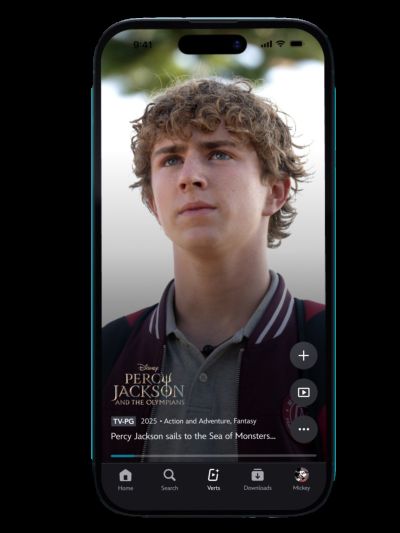
On April 1st (yes, no joke), Disney announced Verts, a swipeable, vertically oriented video experience in the Disney+ mobile app that lets viewers “quickly discover new favourites (or rediscover ones you love)”.
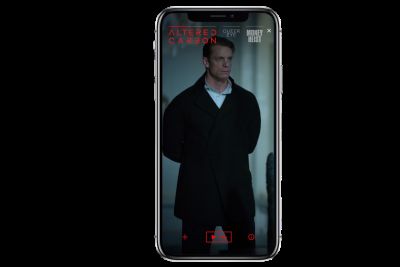
On April 30th, Netflix followed with Clips, a vertical video feed “designed for the way you actually use your phone”. Netflix positions it as a personalized highlight reel: short clips from series, films and specials, tailored to your tastes, helping you decide what to watch or play next without endless scrolling.
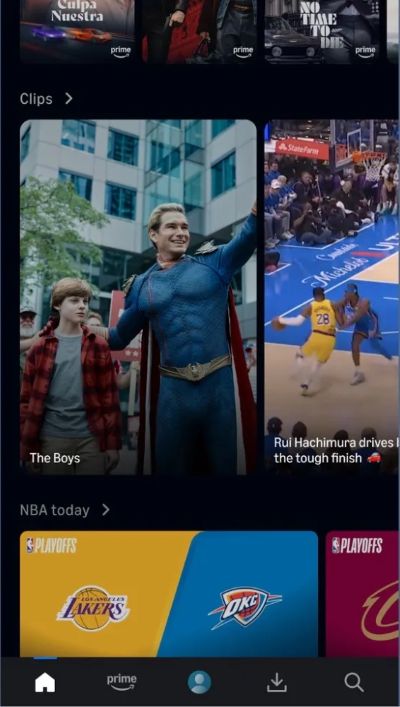
On May 8th, Amazon Prime Video completed the trio with its own clips feed: a scrollable, short-form feed with moments from movies and series across the Prime Video catalogue.
I haven’t had the chance to experience the features myself yet, as they are not yet available in the Netherlands, but the pattern is clear: vertical video, swipe navigation, personalized, and positioned explicitly as a discovery tool. The TikTok-style feed is now also a UI pattern for streamers.
Verticals Find Their Way to the Big Screen
In 2017, a Dutch newspaper interviewed me for an article on TV innovations. One question from the journalist stuck with me: since people increasingly watch vertical video on mobile, will TV sets themselves become vertical? I considered it a funny question at the time, and indeed the widescreen display stayed. But interestingly, vertical video formats are now gaining presence on the horizontal big screen.
One reason is simple screen real estate: vertical assets let you show more titles at once. So as I did for the previous article, I surveyed how some platforms handle verticals on the big screen on Android TV. A snapshot, not an exhaustive study, but insightful:
- YouTube shows the contrast clearly: a regular content row fits about 2.5 items on screen, while the Shorts row fits 5.5.
- Apple TV uses a 2:3 aspect ratio for some rows, fitting roughly 2x the amount of items compared to 16:9 thumbnails, with video trailers cropped to fit.
- Netflix and Amazon Prime Video have adopted poster-style (portrait) artwork in places, but neither plays 9:16 video on the big screen (yet).
- SkyShowtime currently has no vertical presence at all.
- Instagram launched Instagram for TV in December, initially available on Fire TV and since February also on Google TV, both in the US for now, bringing their social vertical video format to the big screen. To me this is the strongest signal of all: the format is no longer being adapted for TV, it is simply arriving there as-is.
The pattern: vertical layouts are arriving on TV faster than vertical playback. Platforms embrace the space efficiency of portrait artwork, but most do not yet actually play 9:16 video on the big screen.
From Discovery to Snackable: When the Clip Becomes the Content
When we started working on video previews at Media Distillery a few years ago, our mission was to help viewers use video to discover programs on our customers’ platforms. Since launch we have automatically generated over 40,000 video previews, helping our customers enhance discovery and boost viewing.
But after processing large volumes of programs, we noticed something else: some of these short clips work as independent, bite-sized pieces in their own right. A joke from a stand-up special, a famous movie dialogue, a scene from The Simpsons. For some viewers, the clip is not a teaser for the show. It is the show. They may have no intention of watching the full program; the moment itself is the content.
You can see the same dynamic on Instagram and TikTok, where clips from current and older shows often are the main attraction rather than an advertisement for the program behind them. This is also confirmed in the YouGov research: 69% of 16 to 24 year olds watch clips instead of full versions, with the report concluding that bite-sized content is becoming a viewing format in itself.
The frequency gap is striking too: 85% of 16 to 24 year olds watch short-form content weekly versus 45% of those 55 and over, and 69% of younger viewers watch it daily versus 18% of older adults.
Discovery and Consumption Are Converging
So where does this leave us? Last issue I argued video would become the means of discovery. That has clearly materialized: social clips drive full-program viewing, streamers have built clip feeds into their apps, and verticals are reaching the big screen. But the more interesting development is that the line between discovering content and consuming it is blurring. The same 20-second clip can be a trailer for one viewer and the complete experience for another.
For platforms, that changes the product question. It is no longer just “how do previews, trailers and promos drive viewing of the full program?”, but also “how do we serve viewers for whom the clip is the main meal?”. And “where do they want to be served?”
That has implications for catalogue strategy (which moments in your library deserve a second life as standalone shorts), for metadata needs (descriptions and thumbnails on a clip level), and for how engagement is measured: a viewer who watches five great moments from your catalogue and leaves satisfied may not show up as a completed stream, but they did connect with your
The good news: the same AI-driven approach that now makes video previews scalable also makes this repurposing scalable by means of automated AI-based video clipping. The library of long-form content that platforms already own is full of snackable moments waiting to be found. In the coming year, I expect more streaming services to treat short-form not as a marketing afterthought but as a first-class format alongside the programs it comes from.
Sources:
- YouGov, How short-form video on social media is impacting TV viewership in 2026: https://yougov.com/en-gb/articles/54298-how-short-form-video-on-social-media-is-impacting-tv-viewership-in-2026
- Disney+ Verts announcement: https://www.disneyplus.com/explore/articles/disney-plus-verts
- Netflix Clips announcement: https://about.netflix.com/en/news/introducing-exciting-new-ways-to-find-and-enjoy-your-next-favorite-on-mobile
- Amazon Prime Video Clips announcement: https://press.aboutamazon.com/prime-video/2026/5/prime-video-delivers-a-new-way-to-discover-entertainment-with-clips
- Meta, Instagram for TV: https://about.fb.com/news/2025/12/instagram-for-tv/
content.
Latest IAMT News

Globecast Demonstrates Content Exchange Latest Capabilities at SPORTEL Monaco 2026

Beam Dynamics Appoints Brian Mauger as Regional Sales Manager, North America

Sign-Up Here
Industry news, event updates and more. Sign-up for the IAMT Newsletter.