
Grass Valley – JT-DMF and MXL: Shared Foundations for Software-Defined Production at Scale

Adam Marshall, Chief Product Officer, Grass Valley
Software-defined production is no longer an emerging concept. Media organizations are under pressure to deliver more content, faster and across more platforms than ever before, while also reducing operational costs. The industry has crossed a threshold.
The question is no longer whether software-defined production can work. The challenge is how to scale it without reintroducing the complexity it was intended to eliminate.
Two initiatives are emerging as practical responses to that challenge: JT-DMF and MXL.
JT-DMF provides a reference architecture for how dynamic facilities can be structured, governed, and operated across on-premises, cloud, and hybrid environments. MXL introduces a high-performance approach to media exchange that enables software applications to collaborate more efficiently within modern compute environments.
Together, they point to something the industry increasingly needs: a shared set of architectural and operational principles that support predictable interoperability and scalable software-defined production.
Importantly, this is not a vendor-only effort. Both JT-DMF and MXL are being developed with customer advisory participation and support from organizations including EBU, NABA, AMWA, and leadership from CBC/Radio-Canada. The objective is to ensure that the outcomes reflect real operational requirements rather than purely technical goals.
Why Common Principles Matter
Over the last decade, the industry has progressed from dedicated hardware systems to virtualization, containers, and platform-based software environments. Throughout that transition, broadcasters and media organizations have continued to pursue best-of-breed solutions, and for good reason.
However, that same pursuit has often resulted in fragmented orchestration, environment-specific deployment models, and media exchange mechanisms that still resemble traditional system-to-system transport, even when applications are running on shared compute infrastructure.
The result is familiar: increased operational overhead, inefficient use of resources, and avoidable latency.
The purpose of common principles is not to reduce choice or limit differentiation. Rather, it is to establish a consistent foundation that makes best-of-breed solutions easier to deploy, operate, and evolve. As software-defined production environments become larger and more distributed, interoperability becomes as important as individual application capabilities.
The next stage of software-defined production is not simply about moving workloads into software. It is about enabling collaboration at scale across applications, platforms, and vendors.
JT-DMF: A Blueprint for Scalable Architectures
JT-DMF can be viewed as a blueprint for building and operating scalable software-defined production environments, particularly in hybrid deployments.
Its focus is on the architectural and operational foundations required to support dynamic facilities, including:
- Workload orchestration and operational responsibilities
- Identity and access management
- Lifecycle management
- Deployment models that span on-premises, cloud, and hybrid environments
The initiative is still in its early stages, with formal kick-offs taking place in late 2025. Its purpose is not to constrain innovation, but to make deployment and operation more repeatable.
As software-defined environments grow, organizations should not need to rebuild the same operational and integration layers for every deployment. Establishing common architectural frameworks can reduce ambiguity, simplify collaboration, and improve long-term operability.
JT-DMF also provides a common structure through which vendors and customers can work together more effectively, helping to reduce complexity while accelerating deployment and integration.
MXL: Enabling Application Collaboration
If JT-DMF provides the architectural framework, MXL addresses another important challenge: how media is exchanged within software-defined environments.
SDI, and many IP media workflows that followed, were built around the transport of media between systems. Those models were designed for predictable pacing and controlled infrastructure environments, where media was moved from one device to another.
Modern compute environments operate differently.
CPUs and GPUs optimize performance through asynchronous processing, parallel execution, and shared access to resources. Repeatedly copying, transporting, and duplicating media between applications introduces unnecessary overhead. Every copy consumes compute resources, increases memory pressure, adds latency, and reduces available processing capacity.
MXL takes a different approach. Rather than focusing on transport between systems, it enables applications operating within a shared compute fabric to access and process the same media streams directly.
Multiple applications, potentially from different vendors, can work on the same content concurrently while maintaining alignment between video, audio, ancillary data, and timing. By reducing unnecessary duplication and transport of media, MXL allows software-defined workflows to make more efficient use of available compute resources while minimizing latency.
In practical terms, it aligns media exchange with the way modern compute infrastructure operates.
Applying These Principles in Production
Architectural concepts are only valuable if they can be applied in real production environments.
Large-scale live production demands reliability, performance, operational simplicity, and efficient resource utilization. These are the conditions in which software-defined production must prove itself.
Platforms such as AMPP demonstrate how centralized control, shared operational models, and efficient use of compute resources can be applied at scale. Grass Valley has already introduced MXL support on managed nodes and is working with partners to bring native MXL-enabled applications into production environments.
As JT-DMF and MXL continue to develop, platforms that align with these principles will be able to adopt emerging interoperability models and architectural frameworks as they become established.
Hybrid Includes Hardware
The future of software-defined production is not software-only.
For many organizations, the practical reality is hybrid infrastructure. Hybrid is not simply cloud plus commercial off-the-shelf compute. It also includes purpose-built hardware where performance, density, or economics make it the most effective choice.
The challenge is ensuring that hardware and software operate as part of a single, orchestrated environment rather than as separate domains connected through additional layers of integration.
This requires consistent control, predictable performance, and efficient movement, or in some cases non-movement, of media between edge infrastructure and compute resources.
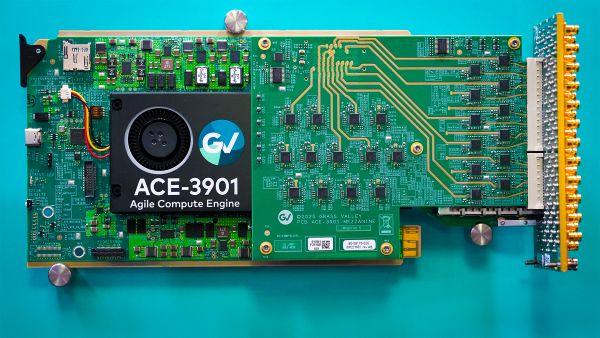
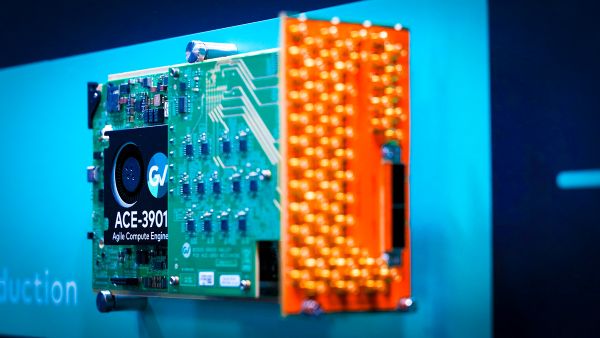
An example of this approach is Grass Valley’s ACE-3901, a modular card designed to bring high-density baseband I/O into MXL-enabled software-defined workflows. The objective is not hardware versus software. It is reducing friction at the edge so that systems can scale without creating new operational bottlenecks.
Shared Foundations for Scale
Software-defined production is already being used in live production environments. The challenge now is making those environments easier to deploy, operate, and scale across different infrastructures and vendor ecosystems.
JT-DMF and MXL address different aspects of that challenge. JT-DMF provides a framework for how dynamic facilities can be structured and managed. MXL focuses on how applications exchange and process media efficiently within modern compute environments.
The benefits are practical:
- Faster integration
- Lower operational overhead
- Better utilization of compute resources
- Greater flexibility when introducing new capabilities
- Improved interoperability across vendors
Platforms such as AMPP demonstrate how many of these principles can be applied today through centralized operations, shared infrastructure, and efficient use of compute resources. As JT-DMF and MXL continue to develop, they provide a common framework that can help reduce complexity and improve interoperability across software-defined production environments.
The objective is not to limit innovation or differentiation. It is to establish a common foundation that makes it easier for organizations to deploy, operate, and evolve software-defined production systems at scale.
Latest IAMT News
Globecast Demonstrates Content Exchange Latest Capabilities at SPORTEL Monaco 2026
Beam Dynamics Appoints Brian Mauger as Regional Sales Manager, North America

Sign-Up Here
Industry news, event updates and more. Sign-up for the IAMT Newsletter.