
Grass Valley – Why Broadcast AV is Becoming a Buying Model

Jon Lyth, Product Director, Grass Valley
Let’s start by stating the obvious. A company town hall is not television. And an earnings call is clearly not a live sports production. But they both have one thing in common: once they go live, the consequences of failure can be just as severe. If the production looks unprepared – or the stream simply fails – people switch off or go elsewhere. Poor production can damage an organization’s credibility, making it appear careless or unprofessional.
Enterprises do not want to become television networks and it’s why the broadcast AV space is becoming more than a label for a particular project. They do, however, want the confidence that comes from infrastructure designed to perform repeatedly and hold up under pressure. In short, broadcast AV is evolving from a label for individual projects onto a buying model for organizations that need reliable video operations.
This direction of travel is opening new growth opportunities for media technology suppliers, as professional production technology finds new roles elsewhere in M&E and across enterprise AV. Realizing that opportunity means adapting the operating experience for teams without specialist broadcast expertise.
From Room Deployment to Production Operations
Traditionally, much of the enterprise AV conversation has centered on equipping more rooms and endpoints. While that remains important, many organizations are moving beyond the first phase of hybrid communication, asking what those environments can produce and whether the same setup can support the next event without being rebuilt.
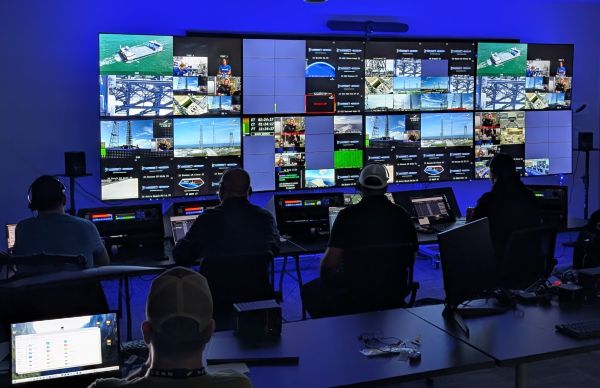
Video production is becoming part of normal operations. In a corporate environment, that may mean a permanent studio for executive broadcasts, while at a major venue, it may mean bringing live production in-house. The requirements differ but both environments depend on reliable production. In financial services, for example, leadership communications can shape how employees respond to change, while an earnings call can affect investor confidence.
AVIXA’s 2025 Industry Outlook and Trends Analysis estimates that the Broadcast AV segment was worth $44.2 billion in 2025, with a projected CAGR of 3.9% through 2030. That scale reflects the broader role video now plays across professional AV. As video becomes central to how organizations communicate, one-off setups are no longer enough.
What Enterprises are Really Buying
Enterprise customers are now adopting the production principles that make broadcast environments dependable. The signal path must remain reliable from capture to delivery, even when different operators use the workflow. It must also have enough capacity to add destinations or formats without a full system redesign. Resilience cannot be added after something goes wrong.
Software has made production more flexible and day-to-day operation simpler. Accessibility does not mean removing professional capability, but it does require placing a simpler operating experience over infrastructure that still meets professional expectations. That flexibility depends on a stable hardware foundation. Enterprise customers are not trying to recreate a television facility, but the infrastructure must still move signals predictably and preserve timing when something unexpected happens.
Moving video onto IP networks creates significant opportunities to manage and reuse resources. But ‘networked’ does not automatically mean resilient. A live production system still has to be designed around timing and the bandwidth needed to sustain it. Operators also need enough visibility to identify a problem before it affects the output. The design should also leave room for future growth. Without that headroom, adding another location or increasing the complexity of a production can expose an infrastructure built only for yesterday’s requirements.
The Last 20 Percent Makes the Difference
Although the core technology may be similar whether it’s used by a broadcaster or a global enterprise, the final part of the design is what makes it work for each environment. This is what I describe as “the last 20 percent.” It begins with the people who will use the system and the skills they bring, and covers the way the operation will be supported when something goes wrong. It also reflects how the organization works day to day.
For instance, a workplace technology team will approach a system differently from a broadcast engineer, while a communications team running a monthly town hall has different priorities from a venue delivering weekly live events. The design also has to fit the organization’s IT environment and the way the system will be supported. That’s why moving a broadcast product into an enterprise environment is too crude a measure; the day-to-day experience has to make sense to its users. Good engineering may become less visible as a result, but it’s no less important.
Because enterprise video creates value in different ways, the return on investment cannot always be measured through audience figures or direct commercial revenue. A repeatable workflow might help an internal team run an important event without outside support every time. At a larger scale, several business units might share the same production resources rather than build separate systems.
These outcomes are harder to summarize on a single dashboard, but their value becomes clear over the longer term. A system that performs consistently can reduce operational risk while allowing the original investment to keep delivering value as needs change. The starting point should therefore be the outcome the organization needs, not the technology category it believes it should buy. Standards and platforms are important, but they should follow that operational requirement.
A Model Built For Enterprise
Whatever the use case, the production has to work when it goes live. Enterprises are not becoming broadcasters, and they do not need to. For media technology suppliers, growth will come from translating proven production disciplines into systems that fit the way enterprise teams already work. That is the real opportunity behind Broadcast AV: not more technology for its own sake, but infrastructure that lets organizations produce important video with confidence as their operations grow.
Latest IAMT News

Globecast Brings Media Orchestration and C-Band Transition Expertise to NAB Show New York 2026
IAMT™ CEO Update: – MediaTech Redefined: Driving Member Momentum and Impact into IBC 2026

Sign-Up Here
Industry news, event updates and more. Sign-up for the IAMT Newsletter.