

Avid – Efficiency Starts with the Story

Craig Wilson, Avid
Efficiency has become the defining question for newsrooms because the audience around them has expanded. A developing story may need to become a live broadcast, web update, vertical video and longer analysis, often in the same news cycle. Audiences have fragmented. The workload has grown.
he industry often describes this as a need to do more with less, but I think that phrase lets the workflow off too easily. Journalists already work quickly – the bigger problem is the friction around them. A reporter searches in one system and writes in another. Media has to be moved before it can be used. Someone discovers too late that a colleague has already started work on the same event or that they are both chasing the same interviewee. Speeding up one task achieves little if the story still has to fight its way through a fragmented operation.
One Story, One Shared View
Efficiency starts by changing the thought process around which the newsroom is organized. In a traditional model, teams tend to gather around outputs. Broadcast prepares its programme while digital builds a separate version. Social may start again. Each group draws on much the same reporting, but the links between them are often manual. Updates travel outside the production system. Material is copied and context gets lost.
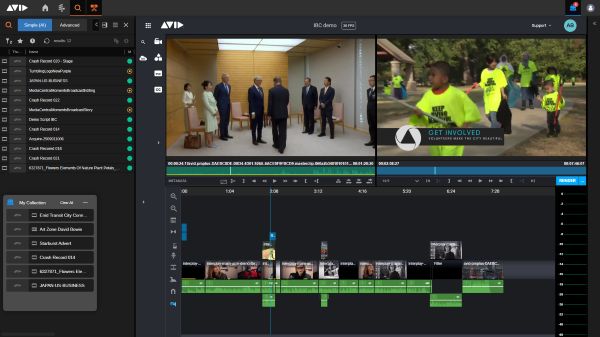
A story-centric newsroom begins somewhere else. The story becomes the shared object around which planning, scripts, media and updates come together. A television bulletin has different demands from a mobile feed, but both teams can work from the same developing information and see what others are doing.
That shared view changes everyday decisions. The planning editor can see that a crew is already assigned, and its video can flow straight into the developing story. A digital producer can use the interview as soon as it arrives. If a fact changes, everyone sees the correction in context. There is one location where everything can be accessed, rather than disparate pockets of wisdom.
ITV’s Chief Technology Officer, Jon Roberts, put the point well in one of our recent Making the Media podcast conversations: “No journalist got into the industry to copy and paste between systems or manage logistics.” The workflow should carry that burden. Customers ask us for a “single pane of glass”: a place where the journalist understands the story and reaches its media without leaving the work. Open integrations preserve choice; the experience stays connected.
Bring Intelligence to the Journalist
The same test should apply to AI. A few years ago, much of the industry conversation treated AI as something to bolt onto an existing process. A user would stop what they were doing, send material to a separate tool and then bring the result back. That creates another step to manage.
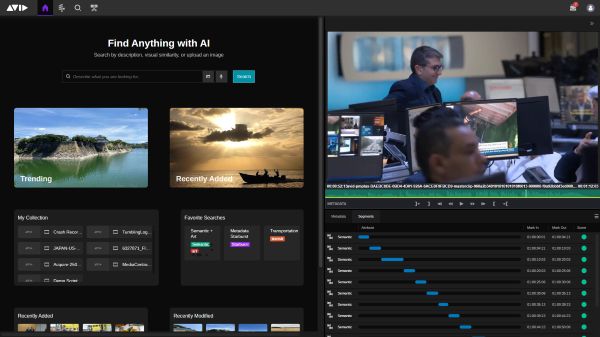
AI becomes useful when it sits naturally in the workflow. An interview can arrive with a transcript, and AI enhanced metadata can surface the archive clip to the journalist as the story develops. AI can also help turn an approved script into a first version for another platform. These practical interventions give people time back without asking them to understand the model underneath.
Editorial control stays with the person doing the work, and every result must be checked in context. As synthetic media becomes harder to identify, provenance and verification must be part of the workflow too.
There is a similar shift under way in media management. News organizations may hold content across on-premises storage, archives and several cloud environments. Moving every asset into a central repository before anyone can use it is slow and expensive. A connected content layer can instead reach media where it already lives, add intelligence and make it discoverable from the newsroom. The journalist sees the material rather than the storage topology behind it.
Modernize Without Stopping the News
None of this works if transformation causes more disruption than it removes. Newsrooms cannot pause output for a technology programme, and familiar systems carry years of muscle memory. I have seen this throughout my career, from newsroom computer-system migrations to major changes in production. The technology matters, but people decide whether the new way of working succeeds. Winning over the staff is the true challenge in change management. Servers do not have feelings; journalists, editors, and producers most definitely do.
That is why modernization needs to happen at the customer’s pace. An organization may keep a proven on-premises system, then add a cloud-hosted capability where it brings a clear benefit. Teams can prove the new workflow and learn from it before moving further. This protects live operations and starts producing value earlier than a large “rip and replace” project, which has inherent risks.
It also leads to a more useful discussion about cost. CAPEX, OPEX and SaaS pricing all matter, but a cheap line item can hide an expensive process. Leaders need to see how much effort a story took to produce, where it travelled, whether its media was reused and how it performed. Connecting production, financial and audience data gives teams evidence for deciding where the next investment will have most effect.
For me, the real promise of newsroom efficiency is taking friction out of the work so journalists can spend more time on journalism. Put the story at the center. Keep the experience connected. Introduce change at a pace people can absorb. The result is a newsroom that moves faster and can show the value of what it produces.
Latest IAMT News

Globecast Brings Media Orchestration and C-Band Transition Expertise to NAB Show New York 2026
IAMT™ CEO Update: – MediaTech Redefined: Driving Member Momentum and Impact into IBC 2026

Sign-Up Here
Industry news, event updates and more. Sign-up for the IAMT Newsletter.