Kiloview P3 Mini Powers Mobile Medical Video Workflow for Real-Time Stroke Assessment
Maastricht University Medical Centre (MUMC), one of the Netherlands’ leading academic hospitals and research institutions, was exploring a new approach to early stroke assessment: could specialist support begin before a patient reaches the hospital?
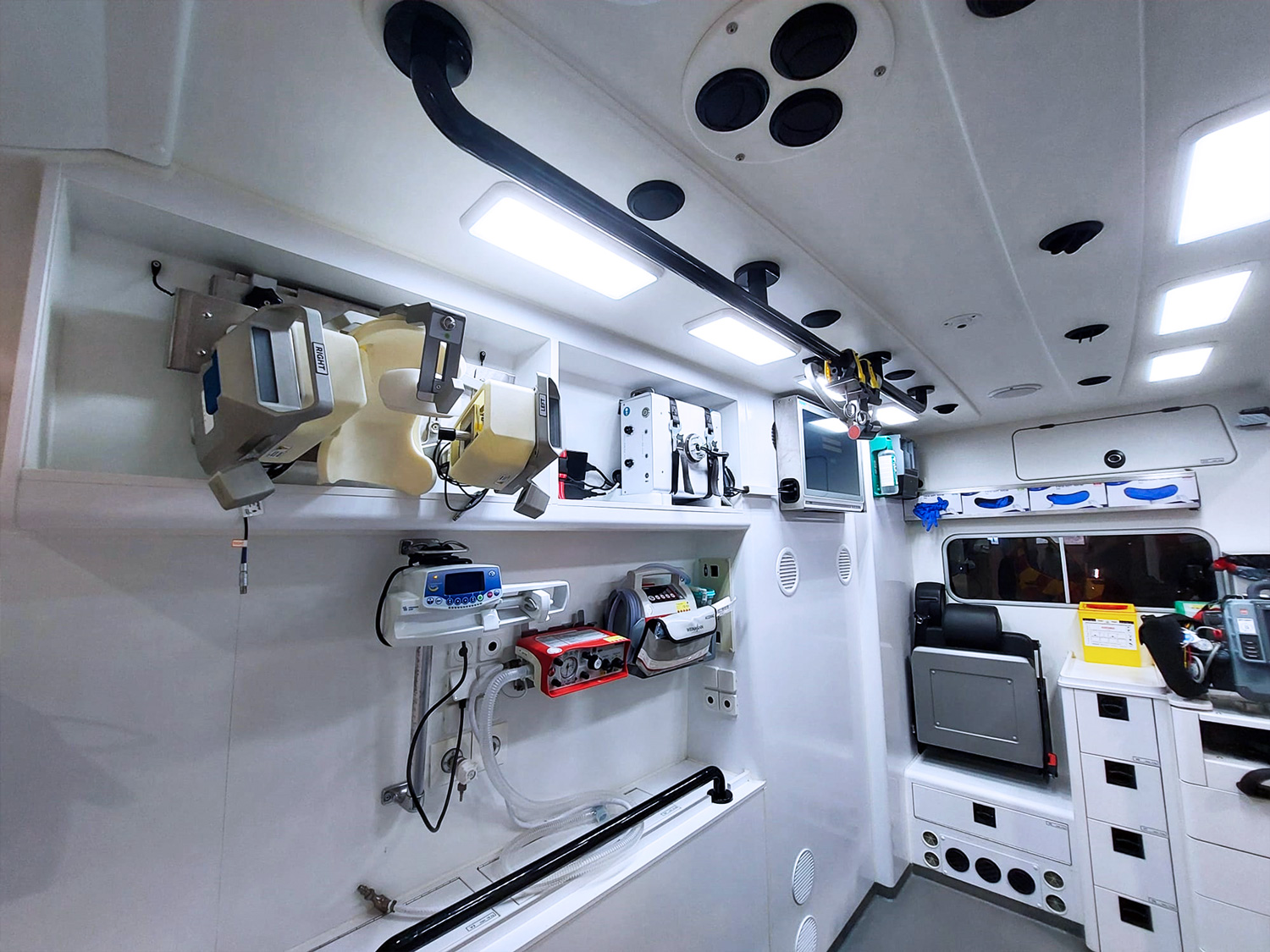
As part of a medical research project, MUMC introduced a robot-guided ultrasound system into an ambulance so examinations could start while the vehicle was on the move. Specialists remained at the hospital, but they needed to view the live ultrasound output and guide the ambulance operator in real time.
This turned a clinical need into a video transmission challenge: the feed had to leave a moving ambulance, cross cellular networks, and reach specialists with enough clarity and low latency for timely guidance.
Enabling Real-Time Expert Support on the Move
The goal of the project was not simply to transmit video from an ambulance. It was to create a practical remote collaboration workflow between ambulance operators and medical specialists. To make this possible, the system needed to address several key challenges.
- Capturing Critical Medical Video for Remote
- The robot-guided ultrasound system output its interface via HDMI, so the workflow needed to capture the medical device screen clearly and make it available for remote review in real time.
- Transmitting Video Beyond Fixed Network Infrastructure
- The live video feed had to be delivered from a moving vehicle to remote specialists, rather than remaining limited to the local ambulance environment or fixed hospital infrastructure.
- Maintaining Stream Continuity Across Cellular Networks
- As the ambulance moved between coverage areas, the workflow needed to remain stable during cellular tower handoffs to avoid interruptions to remote monitoring.
- Supporting Low-Latency Remote Visibility
- Because specialists needed to assist during live examinations, the video feed had to be delivered with minimal delay so that expert guidance could remain timely and useful.
These requirements called for a compact and reliable mobile streaming workflow that could acquire the medical device output, transmit it over cellular networks, and make it accessible to remote specialists with low latency.
A Low-Latency Mobile Streaming Workflow with Kiloview P3 Mini
To support this workflow, MUMC deployed Kiloview P3 Mini wireless bonding encoder to capture and transmit the output from the robot-guided ultrasound system inside the ambulance.
- Turning HDMI Output into an IP Stream
- P3 Mini converted the ultrasound system’s HDMI output into an SRT stream, allowing specialists to view the live system output during operation. With HDMI, SDI, and USB input support, it also provides flexibility for different medical and professional video sources.
- Streaming Directly over 4G
- Using P3 Mini’s direct streaming mode, the video feed was transmitted over a Vodafone 4G connection to Ant Media Cloud. Specialists could then view the live stream through a browser, without additional on-site receiving infrastructure.
- Supporting Mobile Transmission Conditions
- Built for mobile contribution, P3 Mini helped support reliable transmission as network conditions changed during ambulance operation. Its antenna isolation design helps reduce wireless interference and improve connectivity stability.
- Enabling Low-Latency Remote Monitoring
- With real-time H.264/H.265 encoding up to 1080p60 and support for low-latency IP streaming protocols, P3 Mini enabled efficient video delivery for near real-time monitoring of the live ultrasound output.
With this setup, the ambulance-based ultrasound system became accessible to remote specialists through a lightweight workflow built around direct 4G streaming and browser-based viewing.
Reliable Performance for Mobile Medical Research
During vehicle testing, specialists were able to monitor the live ultrasound output and support operators during examinations while the ambulance was on the move.
The workflow delivered 1920×1080 H.264 video at approximately 1.56 Mbps, with sub-second end-to-end latency. While the ambulance moved between cellular coverage areas, tower handoffs caused only brief interruptions of less than one second, helping maintain stable remote monitoring in changing network conditions.
Following successful testing, the system was deployed in an ambulance and operated for several months without reported issues. For MUMC, the project demonstrates how lightweight, low-latency video transmission can bring specialist expertise closer to the point of care, with future expansion already planned for a second ambulance.
Latest IAMT News

IAMT Dynamic Software Licensing Group Launches Public GitHub Repository

IAMT Annual Conference & Awards 2026: first speaker announced

Sign-Up Here
Industry news, event updates and more. Sign-up for the IAMT Newsletter.