Redefining Broadcast Workflow: How Kiloview’s NDI Solution Transformed BRTV’s Production Upgrade
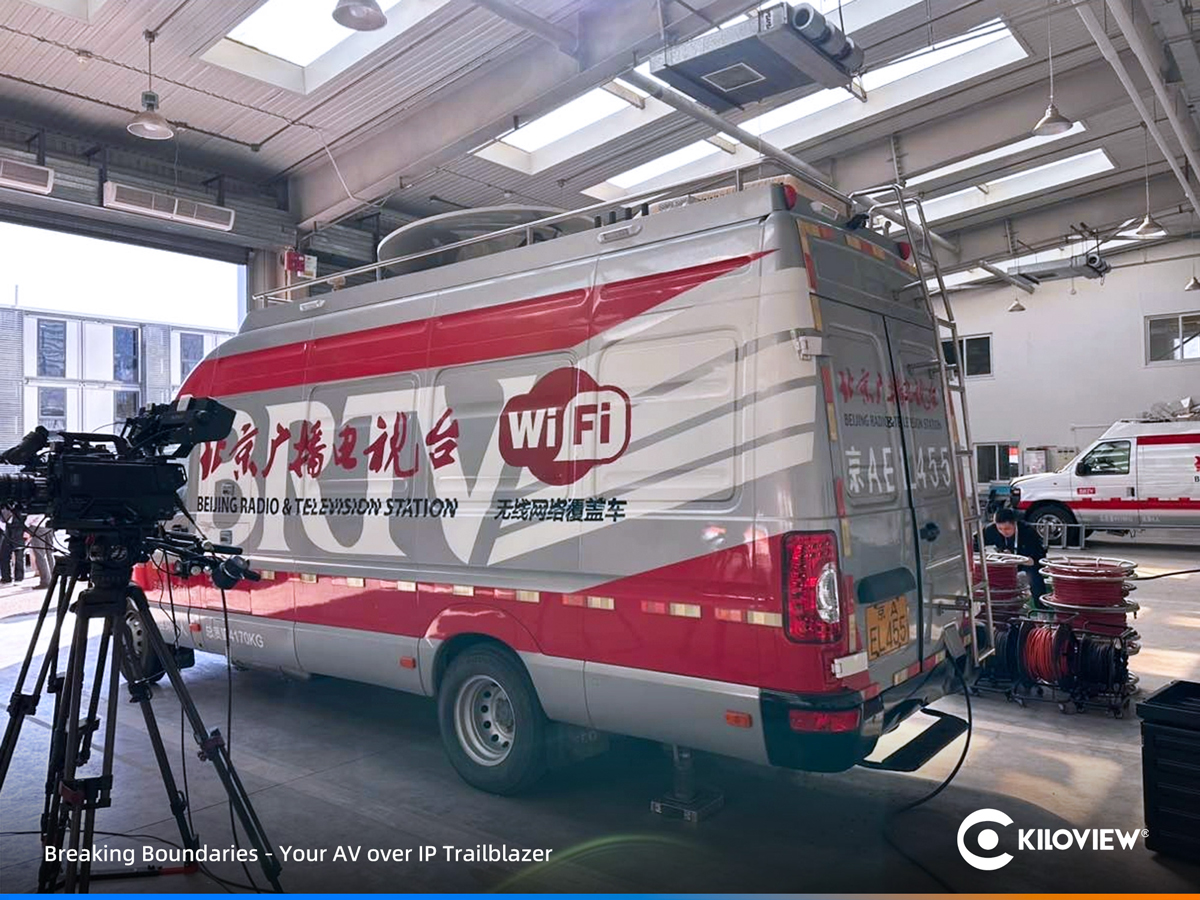
Beijing Broadcasting Television Station (BRTV), one of China’s leading provincial broadcasters, transformed 16 previously isolated SDI studios and OB production workflows into a unified NDI-based IP production infrastructure.
Supporting daily news production, large-scale live programs, and major national events, BRTV required a more flexible and collaborative production workflow to support increasingly complex broadcast operations.
Rather than completely replacing its existing SDI systems, BRTV chose to gradually transition toward a scalable IP workflow with Kiloview’s NDI solutions while maintaining compatibility with its current broadcast systems.
Challenges: Breaking the Limits of Traditional SDI Production
As production demands continued to grow, BRTV’s traditional SDI workflows became increasingly difficult to manage across both studio and OB production environments.
For Studio Production
- Isolated Studio Workflows: BRTV’s 16 studios operated on separate SDI systems, limiting signal sharing and cross-studio production. Large productions often relied on temporary cabling and manual coordination.
- Limited Flexibility for Field Contribution: Field contribution workflows depended on fixed transmission links and complex deployment, making live production and breaking news coverage slower and less flexible.
- Complex Signal Routing and System Expansion: The existing SDI workflow relied heavily on point-to-point routing and extensive wiring, making signal management and future expansion increasingly difficult, especially for larger-scale and 4K workflows.
For OB and Remote Production
- Limited OB Connectivity and Mobile Scalability: Outside broadcast workflows relied on fixed fiber transmission and hardware-heavy deployment, limiting flexibility for agile and mobile production scenarios.
- Barriers to Modern Production Workflows: The existing system was not designed for remote production or multi-platform content delivery. Live contribution workflows for breaking news were also slower and less efficient than modern broadcast demands required.
These limitations made it difficult for BRTV to support more scalable IP-based production workflows in the future.
Solutions: Building a Unified NDI-Based IP Production System
To modernize production workflows while maintaining compatibility with its existing SDI systems, BRTV deployed Kiloview’s NDI solutions after extensive workflow testing and validation.
By combining flexible modular deployment, centralized NDI signal management, and seamless SDI-to-NDI integration, the new workflow allowed BRTV to gradually transition toward a more scalable and unified IP production environment without disrupting ongoing broadcast operations.
- Studio Signal Integration: Cradle Series RF02 with FN-50/FN-60 Conversion Cards
- Centralized Routing: NDI CORE MAX
- Remote Contribution: P3 Mini Wireless Bonding Encoder
- Signal Conversion & Distribution: FMG-400 Media Gateway Card
- OB IP Signal Conversion: N50/N60 All-in-one Converters
Studio IP Production Upgrade
- Connecting Independent Studios: Using RF02 and FN-50/FN-60, BRTV connected isolated studio systems into a unified NDI workflow for more efficient signal sharing and production.
- Enabling Flexible Field Contribution: With P3 and FMG-400, field signals could be transmitted over 4G/5G networks and received by RF02 as bonded streams for fast integration into the studio production workflow.
- Centralized Signal Management: Through centralized signal management by NDI CORE MAX, the new workflow simplified signal routing and enabling faster switching between studios compared with traditional SDI routing.
IP-Based OB and Remote Production
- More Flexible OB Production Workflows: With N50/N60 converters, SDI and HDMI signals from OB environments could be converted into NDI streams and transported through shared network and fiber infrastructure, simplifying OB deployment.
- Integrated Remote Production and Content Delivery: NDI CORE MAX centralized the distribution of OB and remote contribution feeds, allowing signals to be routed to RF02-based switcher production, NDI workflows, or Media Gateway outputs for broadcast and streaming delivery.
The deployment gave BRTV a more efficient way to manage studio, remote, and live production workflows within the same infrastructure.
Results: Improved Workflow Efficiency Across Studio, Remote, and OB Production
Through the NDI-based IP production upgrade, BRTV improved workflow efficiency, operational flexibility, and collaboration across studio, remote, and OB production environments.
- More Efficient Multi-Studio Production: By connecting 16 previously isolated studios into the same NDI workflow, BRTV significantly improved cross-studio signal sharing and production coordination, increasing overall studio resource utilization by over 80%.
- Simplified Studio and OB Infrastructure: Replacing large amounts of point-to-point SDI cabling with a centralized IP workflow reduced operation and maintenance costs by over 50%, while simplifying deployment across both studio and OB environments.
- Faster Field Signal Integration: Field contribution signals could be integrated into production workflows within minutes, improving responsiveness for live news and remote production.
- Unified Signal Sharing Across Production: Signals from studios, OB systems, and remote contribution workflows could be centrally managed and distributed within the same IP infrastructure, improving collaboration across different production environments.
“In the past, coordinating signals between different studios was time-consuming and complicated. Now we can manage and share resources much more efficiently, especially during large live productions.” — Senior Broadcast Engineer, BRTV
By deploying Kiloview’s unified NDI-based IP production system, BRTV built a more efficient workflow for studio, remote, and OB production, simplifying signal management and improving collaboration across different production environments. The deployment also gave BRTV greater flexibility for future production expansion while showcasing how traditional SDI workflows can evolve toward IP production.
Latest IAMT News

NDTV Adopts Amagi’s AdFlow Orchestrator, Unlocking Monetization Opportunities on FAST and Connected TV
IAMT Dynamic Software Licensing Group Launches Public GitHub Repository

Sign-Up Here
Industry news, event updates and more. Sign-up for the IAMT Newsletter.