MainConcept – Two Eyes, One Standard: How Reference-Quality MV-HEVC Encoding Is Defining the Immersive Video Era

Geoff Gordon, VP Global Marketing, MainConcept
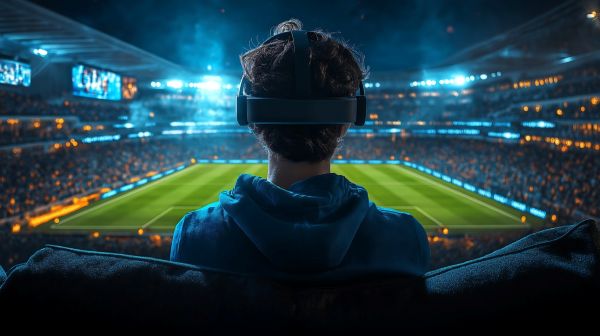
The View From Inside the Headset
There is a kind of discomfort that spatial video can produce when it goes wrong. You put on a headset, enter what should be a convincing three-dimensional environment, and something is subtly off. The scene does not resolve. The depth feels inconsistent. After a few minutes, you take the headset off. The experience has failed to cross the threshold from impressive demonstration to genuinely immersive storytelling.
In most cases, the failure is not in the camera, the lens choices, or the edit. It lives in the encoding pipeline, and specifically in how the relationship between the left eye view and the right eye view has been handled at the point of compression.
To increase the demand for premium content, quality must exceed producer and consumer expectations. Multiview HEVC is the codec that makes efficient stereoscopic delivery possible and is best positioned to meet ecosystem demands. Built on the HEVC/H.265 foundation, it encodes multiple views of the same scene as a single compliant bitstream, using inter-view prediction to share redundant data between the left and right eye channels. The result is far more efficient than encoding two independent streams. But efficiency is only one part of the story. How quality is distributed across those views turns out to matter enormously.
Balancing Quality Across Views
Every encoder designed for stereoscopic or immersive video faces a fundamental design decision: how to distribute image quality across both eyes. One approach prioritizes a single primary view and derives the secondary view from it. This dependency-based architecture is efficient and well-suited to workflows where bandwidth is constrained or where one view is designated as the primary creative reference.
The alternative is to target quality independently and symmetrically across both views, allocating the encoder’s rate-distortion budget in a way that satisfies each channel on its own terms. This approach demands more from the encoder but delivers perceptual consistency across the stereo pair, which becomes increasingly important as content length and viewing immersion increase. For a five-minute short film, the difference may be negligible. For a ninety-minute narrative feature or a live sports event delivered to a headset, it is a meaningful creative and viewer experience consideration.
The MainConcept Multiview HEVC Encoder SDK is designed to support both approaches, giving professionals the flexibility to choose the encoding mode that best fits their workflow, content type, and delivery requirements. That flexibility, backed by the same rate-distortion optimization and perceptual quality tuning that MainConcept has refined across decades of codec development, is what makes the SDK a production-ready tool across the full range of Apple Immersive Video (AIV) use cases.
Apple Immersive Video and the Ecosystem
MainConcept has been building professional video encoding components for over 30 years, and the quality philosophy that has made its tools a reference standard in broadcast and post-production informs how Multiview HEVC is handled.
Apple Vision Pro uses Multiview HEVC as a delivery format for Apple Immersive Video content. Studios, post-production facilities, and independent creators preparing content for Apple Immersive Video now have access to the same encoding quality standard that professional broadcast tools have relied on for decades.
This matters for the creator economy as much as for the studio pipeline. Apple Immersive Video is not, at this stage, the exclusive domain of large production houses. Independent filmmakers, virtual production teams, enterprise training and events producers, and live content operators are all exploring the format. The quality of the encoding they use will shape their audience’s first impression of immersive content.
SDK Architecture and Ecosystem Integration
The MV-HEVC Encoder SDK is designed for integration across the full production chain. It is available alongside MainConcept’s MP4 Multiplexer and HLS packaging solutions, enabling complete Apple Immersive Video pipelines across a range of delivery targets from a single encoding workflow. Blackmagic Design has integrated the SDK into DaVinci Resolve, bringing reference-quality encoding to one of the most widely used color grading and finishing platforms in the industry. Colorfront’s professional transcoding tools similarly incorporate the SDK, extending its reach into high-end post-production pipelines.
This ecosystem approach reflects how professional codec components actually get deployed. A reference-quality SDK that sits inside the tools creators already work with is more likely to raise the floor across the industry than a standalone application that requires a separate workflow step.
Quality Infrastructure for a New Creative Medium
The IABM Technology and Trends Roadmap identifies Immersive and Imaging as a key area in active development, with spatial content solutions evolving rapidly across the Create and Produce stages of the content chain. Multiview HEVC is the de facto delivery standard for headset-based spatial experiences, and what the industry now needs to establish is a consistent quality expectation at the encoding stage. Delivery format standardization is only meaningful if the content arriving in that format meets a quality bar that justifies the immersive viewing experience.
Spatial video is a new creative medium. The storytelling format is still being explored. Filmmakers are working out how to direct attention in a volumetric space, how to handle cuts that the audience experiences differently from 2D, and how to build narrative arcs that reward extended headset viewing. Encoding quality is one of the infrastructure decisions that will shape what the medium can become. It is not glamorous compared to the camera technology or the display optics, but it is the point at which the creative work is either preserved or subtly degraded.
Getting the quality standard right now, before the volume of Apple Immersive Video content scales, is the right moment to set the bar. That is what reference-quality Multiview HEVC encoding makes possible.
Latest IAMT News
IAMT CEO, Saleha Williams, to speak on CNN Global Perspectives Doha
Amagi powers KT Studio Genie’s global micro-drama expansion

Sign-Up Here
Industry news, event updates and more. Sign-up for the IAMT Newsletter.