
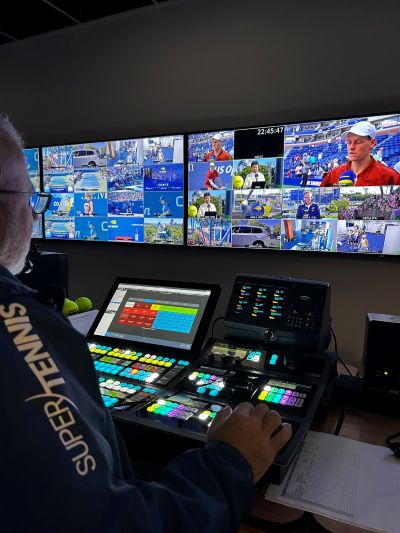
Pebble – What Live Sport Demands From a Playout Platform

Sally Wallington, SVP Sales, Pebble
Live sport has always been one of the toughest tests of a broadcast operation. It brings audiences together in real time, creates moments that cannot be repeated and leaves very little room for delay, uncertainty or error. When something happens, the viewer expects to see it. When a break arrives, the operator has to be ready. When the action resumes, the return to the live feed has to be clean, immediate and reliable.
That sounds simple from the outside. Anyone who has worked around live sports playout knows it is anything but.

At Pebble, we support broadcasters, service providers, streaming platforms and media companies whose live sports services reach audiences of millions. These are environments where the playout layer may sit behind the scenes, but the pressure on it is very visible: schedules move, feeds change, commercial breaks shift and every return to live action has to happen cleanly. The details vary from customer to customer, but the expectation is consistent. The playout platform has to support the operational team, fit around their workflows and give them the confidence to react quickly when the schedule changes.
Sport refuses to follow the schedule neatly. A match can overrun. A race can be delayed. A rain break can interrupt play. A commercial opportunity can appear at short notice. A broadcaster may need regional variants, different platform outputs, multiple audio options, live graphics, clean feeds, ad insertion, compliance requirements and disaster recovery, all while keeping the viewer focused on the action.
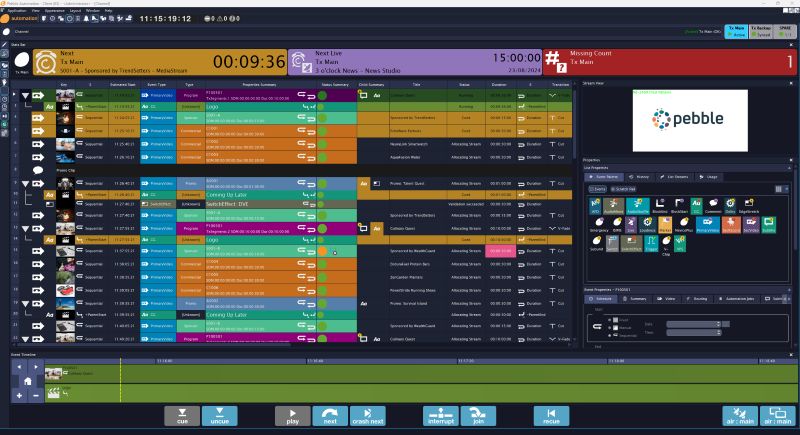
The role of the playout platform is to take that complexity and make it manageable. At a practical level, that means giving operators visibility and control at the moment the schedule changes. They need to see upcoming events, live sources, media status and potential issues clearly, then adjust the playlist, manage break timing or return to the live feed without slowing the operation down. The platform’s job is to make those decisions simpler and safer under pressure.
The industry conversation often moves quickly from one technology trend to the next. Cloud, IP, software-defined workflows, remote operations and new commercial models all have an important place. But the lesson we hear from customers is that no deployment model wins simply because it is fashionable. Broadcasters and media companies want technology that is tested, secure and appropriate for the job.
That is especially true in sport, where many organizations are balancing established infrastructure with new requirements. Some are still working with SDI. Some are moving to IP. Some are running hybrid models across on premises, virtualized and cloud environments. Some need temporary channels for a specific event. Some need centralized control across multiple sites.
The common requirement is flexibility without compromising reliability.
This is where Pebble’s experience matters. Live sports operations need systems that are proven in real broadcast environments, but flexible enough to support different channel models, workflows and delivery requirements. Pebble Automation is designed for enterprise-level linear channel delivery and supports operations from a single channel to large multi-channel environments. It can support live and unpredictable content, regional opt-outs, simulcast and complex channel types, while presenting operators with a unified interface.
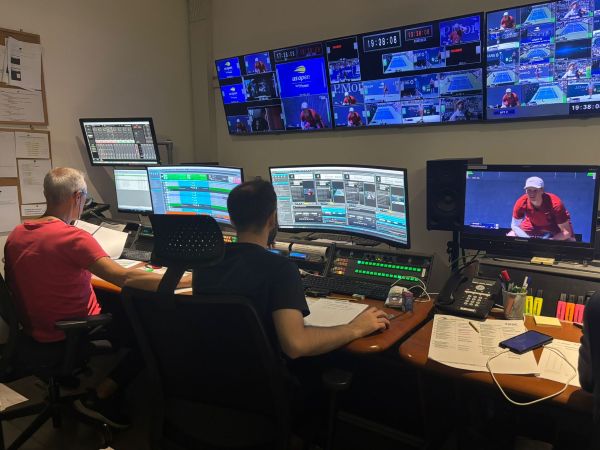
Pebble Remote also plays an important role for customers managing distributed operations. Secure, web-based monitoring and control allows teams to see multiple channels and systems, identify issues by exception and manage channel playout from inside or outside the traditional transmission environment. For sports operations involving remote sites, centralized network centers or business continuity workflows, that visibility is valuable.
Of course, every customer is different. A global service provider, a regional broadcaster, a specialist sports channel and a streaming platform may all need robust live playout, but their commercial pressures, operational structures and risk profiles will not be the same.
The value comes from understanding those differences and building around them.
We are also seeing more companies from outside traditional broadcasting move into live sport and entertainment. They have acquired rights, built audiences and identified the commercial opportunity around live content. What many are now discovering is that live broadcast operations carry a level of complexity that cannot be treated as an afterthought. Reliability, latency, monitoring, advertising workflows, security and operator control all become central to the viewer experience.
Sport will continue to push the industry forward because audiences still value the shared experience of watching something happen live. That is true for traditional broadcasters, new streaming entrants and service providers supporting both. The routes to the audience may keep changing, but the basic expectation remains the same: when the moment happens, it has to be delivered.
At Pebble, we are proud to play our part in that. Our customers trust us with live operations where there is no room for guesswork. That trust has been built over many years, through long-term relationships, careful product development and a focus on doing the fundamentals well.
Live sport demands confidence. It demands resilience. It demands technology that lets teams concentrate on the event, rather than the system behind it. That is where Pebble continues to prove its value.
Latest IAMT News
-
Pebble – What Live Sport Demands From a Playout Platform

Are You Using AI? Are You Working with a Startup?

Sign-Up Here
Industry news, event updates and more. Sign-up for the IAMT Newsletter.