The Next Generation of MediaTech Talent May Already Be Here
Why experienced broadcast professionals need new pathways, not premature obsolescence

Hasan R. Sayed Hasan, Managing Director- Master Media
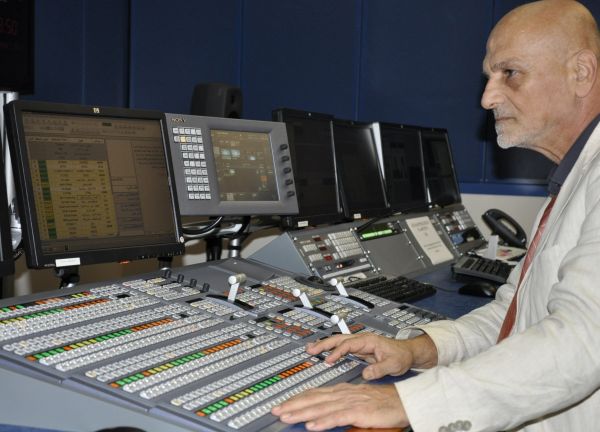
A few weeks ago, I met a group of highly experienced broadcast media technology professionals. They were not people at the margins of the industry: They were engineers, operations leaders, workflow specialists, and technology directors who have helped keep major media organizations on air, online, and operational for years. Until recently, they would have been considered highly sought-after talent.
Now, several of them are out of work. The industry appears unsure what to do with their expertise. Their stories are different, but the pattern is familiar: restructuring, cost reduction, changing distribution models. Media organizations are struggling to remain relevant in a disrupted market.
This is one of the less discussed sides of the “next generation talent” debate. We often talk about attracting young people into MediaTech, building more diverse teams and closing skills gaps, which are critical priorities. There is another question of equal urgency: how do we reposition the experienced talent we already have?
Broadcast technology professionals possess capabilities that many organizations now need more than ever: operational resilience, live-service discipline, multi-vendor management, workflow design, and systems thinking. These skills have not lost value, but traditional job descriptions haven’t caught up with today’s realities and needs.
The next generation of MediaTech talent may therefore not be defined only by age, coding ability, or familiarity with new platforms. It may also be defined by the ability to translate hard-earned broadcast experience into new environments: streaming, cloud operations, enterprise video, archives and AI-enabled workflows. These professionals should not be seen only through the lens of the jobs they used to have, but through the operational capabilities they can still bring to a changing media ecosystem.
For decades, broadcast media technology was built around a simple but demanding reality: failure was visible, immediate, and rarely tolerated.
Broadcast engineers will recognize this discipline in one very simple example: the black frame. For a broadcast engineer, even a single black video frame within an on-air broadcast is an unacceptable failure. In a 25-frame-per-second environment, that black frame may last only forty milliseconds. In many other mission-critical technology environments, and other industries, such an incident might not even register against an availability target.
The point is not that broadcasting is more critical than banking, aviation, healthcare or telecommunications. The difference is that broadcast failure is instantly public. There is no dashboard or end-of-month service report between the failure and the audience: The organization’s credibility is affected instantly.
Over time, this creates a very specific operational discipline. Broadcast professionals learn to think in terms of continuity, redundancy, monitoring, and recovery before the problem becomes visible. They learn that quality of service is not only about whether a system is technically “available,” but whether the end user receives an uninterrupted trusted experience.
This distinction matters far beyond traditional broadcasting. A media workflow may no longer pass through the same physical chain of technology systems. It now involves cloud storage, software-defined production, content orchestration, AI-assisted metadata, and OTT platforms. But the underlying challenge is still familiar: how do we move content through a complex environment reliably, efficiently, and at scale?
This is why the experience of broadcast engineers, operations managers, and technology directors remains relevant beyond the traditional broadcast organization.
Streaming, OTT platforms, and cloud media operations, for example, increasingly need the discipline that broadcasters have developed over many years. Online workflows do not remove the need for operational design, and we do need people who can see the whole workflow, optimize it, and understand where it may fail.
There are also opportunities beyond media companies. Corporations, governments, universities, cultural archives, and other entities increasingly behave like media organizations. They produce and publish content, run live events, and manage digital archives and internal content networks. Many of them need broadcast-grade thinking, even if they do not describe it that way.
AI reinforces rather than weakens this argument. AI tools generate metadata, assist with QC, support localization, summarize content, detect issues and accelerate repetitive tasks. But someone still has to define the use case, judge the output, set quality thresholds, and manage risk.
Our industry probably needs a shift in language. Instead of asking whether a former broadcast engineer or operations expert still fits a traditional broadcast role, we should ask what capabilities that person can bring into a new operating environment. An MCR supervisor may have the foundations to become a cloud operations lead, a transmission specialist may be well placed for service assurance and resilience roles, and an archivist may evolve into a content intelligence or metadata specialist.
This does not mean experienced professionals can simply move into new roles without adaptation: Reskilling is essential. Cloud, cybersecurity, data, AI, and SaaS economics are now part of the MediaTech vocabulary. But reskilling should not be confused with starting again. What is needed is a bridge between legacy expertise and emerging demand.
Industry bodies (like the IAMT), vendors, broadcasters, universities and training providers all have a role to play in building that bridge. Short conversion programs and vendor-neutral certifications could help experienced professionals reposition themselves. Job descriptions should also be rewritten around capabilities and deliverables rather than around the newest tools or the narrowest technical keywords.
For the professionals themselves, part of the challenge is to reframe the story. “I kept a broadcaster on air for 20 years” is impressive, but it may not travel as well as: “I know how to design and operate mission-critical media workflows where failure is visible, costly and immediate.” That sentence applies well beyond broadcasting.
The next generation of MediaTech talent is not a single demographic. It includes new graduates, software developers, data specialists, AI practitioners, and creative technologists. But it should also include experienced professionals shaped by demanding operational environments, where reliability and judgement were non-negotiable. The industry does not need to choose between new digital talent and experienced broadcast professionals, it needs both.
Latest IAMT News
IAMT™ CEO Update: – MediaTech Redefined: Driving Member Momentum and Impact into IBC 2026

IAMT Executive Summary and Detailed Report from the SMPTE September 2026 Standards Meetings

Sign-Up Here
Industry news, event updates and more. Sign-up for the IAMT Newsletter.