nanocosmos – Beyond Broadcast: Where MediaTech’s Real Growth Is Happening

Oliver Lietz, CEO of nanocosmos
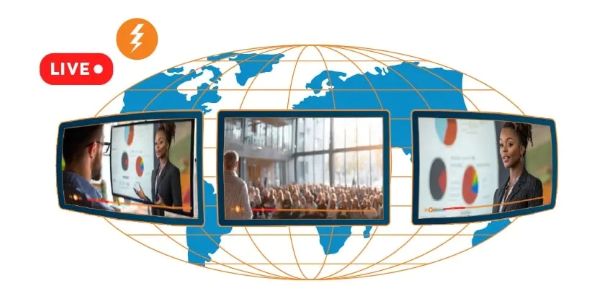
The audience for the broadcast industry has changed. Fewer people are waiting for a channel to tell them what’s on and just watch a show, more are interacting, or bidding, for instance, primarily from mobile devices. That shift toward internet-native media with more interaction is the real hook behind MediaTech’s growth, and it shows up in more than one way. Real-time, interactive video is one of the clearest examples of it.

Broadcast isn’t going away, but it does have to open up to what’s next, or risk being left further behind by it. What used to be considered unattainable territory has become a range of new use cases: an auction house running its own bidding stream, a training platform hosting a live exam, a town hall streaming a CEO address, or even a live game taking bids in real-time. None of them used to think they could deliver audiovisual content without, for example, a TV channel behind them. Now it’s accessible without a traditional broadcast setup or crew.
The growth that comes with this shift isn’t only about reaching a bigger audience or delivering audiovisual content for different use cases. These new verticals also open ways to make money that go beyond the ad-break model broadcast has relied on for decades. Technology has become more comprehensive too, bringing more accessible data along with the video itself: real-time engagement data now shows who’s actually watching and how, enabling models built around participation rather than eyeballs alone. Being open to these new verticals and ways to deliver beyond traditional broadcast is key for growth and new opportunities.

Technology: What Had to be Simplified by Innovating
The shift is also on the technology side, and it had to stop adding steps for the businesses running it.
Two things are crucial for making this possible. First, infrastructure has changed. In live streaming, an educational training business or an auction house doesn’t need to build its own streaming setup. They just use one that already exists, tailored for use cases that demand high interactivity and reliability. Second, features like live captions, translation, and security used to be extras. Now they’re just part of the workflow, no extra effort is needed.
Protocol-level changes are happening too. The rise of Media over QUIC (MOQ) is becoming a major factor for these interactive use cases, covering not just latency but also scalability, resilience, and quality for the best possible experience.
The same logic applies to production. Server-side chroma key and multi-camera switching, capabilities that used to require a broadcast control room, now turn one camera feed into several branded outputs with no extra hardware on-site and no dedicated crew to run them. They’re built into the same workflow as a live casino studio, an auction house, or a town hall setup already uses.
New Use Cases and New Users
These days, the person running a live video workflow, or deciding whether something gets streamed at all, isn’t always an AV engineer at a traditional broadcast company. That’s a direct result of the new use cases opening beyond broadcast: corporate events, eLearning, town halls, auctions or public safety. And these new verticals are also run by people who know their own operation inside out, even if streaming infrastructure isn’t their specialty.

That doesn’t lower the bar, and it doesn’t remove AV engineers from the equation. If anything, it raises the bar. A town hall that stutters in front of the whole company, or a live casino that stops running its 24/7 monetised business, these are major issues that simply can’t happen. Video is a crucial part of the product, but it’s not their main business. They need to concentrate on running their own operation and rely on the expertise of a streaming platform to handle that part for them.
For suppliers, that’s the shift worth designing for. The person deciding whether to trust live video with something that matters is rarely the person who used to make that call, and they’re judging the result by the same standard broadcast always set, whether or not they know that’s what they’re doing.
Markets: Where the Growth is Landing
Corporate events carry real reputational stakes. A stream failure during an all-hands or an investor call is a visible, unrecoverable moment that everyone in the room remembers, whether they meant to or not. Live auctions run on a fraction of a second and a delayed feed means a bidder acted on information that’s already stale, and that’s a financial problem, not just an embarrassing one. Education and training platforms are selling the interaction itself, not the footage, so a lag that breaks the back-and-forth between instructor and participant breaks the actual product being sold. Even the public sector is opening, largely because data-sovereignty rules and accessibility mandates now demand the same live streaming approach that used to be reserved for broadcasters.
These markets ask for reliable and secure live streaming. They want it at a smaller scale, with far less complexity, and for a long time the industry didn’t have an answer for their requirements.
What’s Next
What’s next is simple: new use cases will keep driving this growth. Auctions, town halls, corporate events, live casinos, they’re not waiting for the trends to be set, they are setting them. They’re innovating fast, and traditional broadcasters can learn a lot from them.
This means suppliers need to think beyond their own box too. It’s not just about adding more features. It’s about building end-to-end platforms designed around these new use cases from the start, because that’s what it takes to really understand what these businesses need. Video isn’t a separate piece to bolt on. It has to be part of the whole product.
Latest IAMT News
Pebble – What Live Sport Demands From a Playout Platform
Are You Using AI? Are You Working with a Startup?

Sign-Up Here
Industry news, event updates and more. Sign-up for the IAMT Newsletter.