
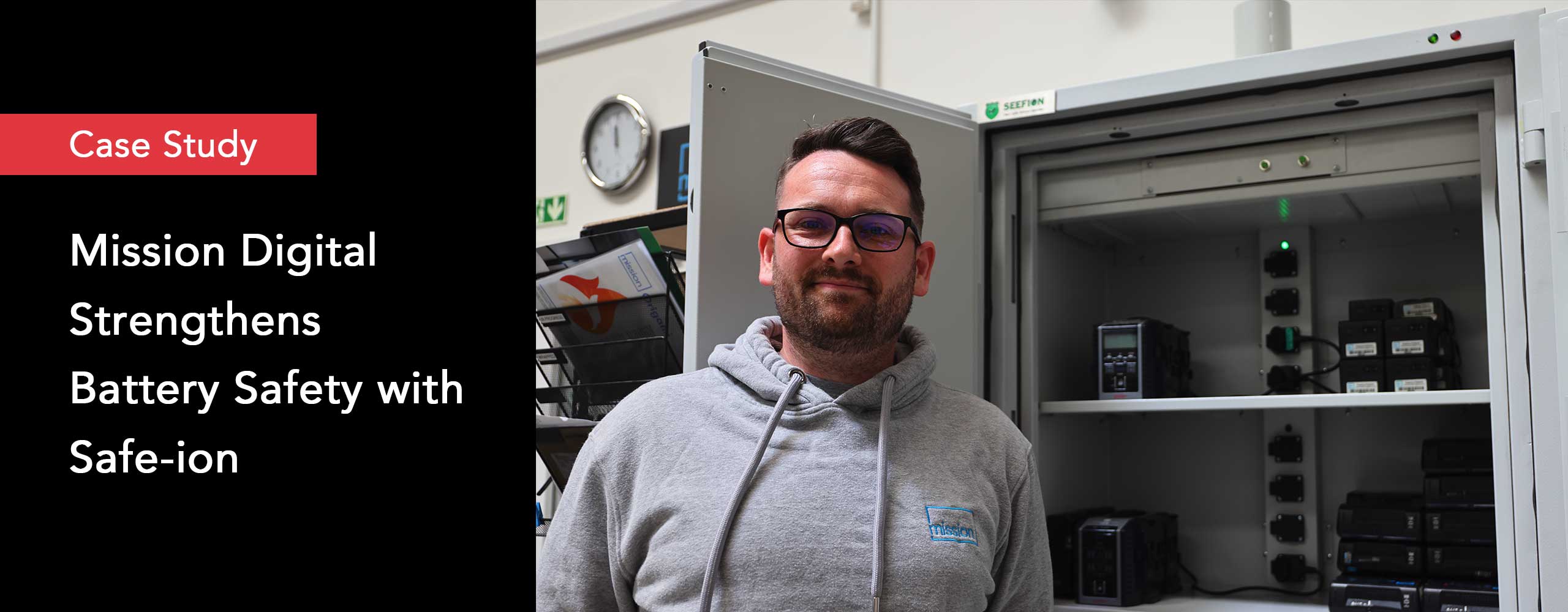
Mission Digital Strengthens Battery Safety with Safe-ion
As productions become increasingly dependent on battery-powered equipment, the safe storage and charging of lithium-ion batteries has become an important operational consideration across the film and television industry. From camera accessories and monitors to drones and production carts, lithium-ion batteries are critical to keeping productions moving.
Mission Digital, a UK-based digital workflow partner supporting productions across the UK and internationally, introduced a Safe-ion battery safe to help protect staff, equipment and facilities while providing greater operational flexibility and peace of mind. Mission Digital offer a variety of services including DITs, video playback operators, digital dailies and support across different parts of the post process, including their software platform Origami which deals with VFX and DI pools. The team prepare, build and test all of their kit at a 2300sq foot workshop situated in the heart of Garden Studios, a large studio complex in Acton.
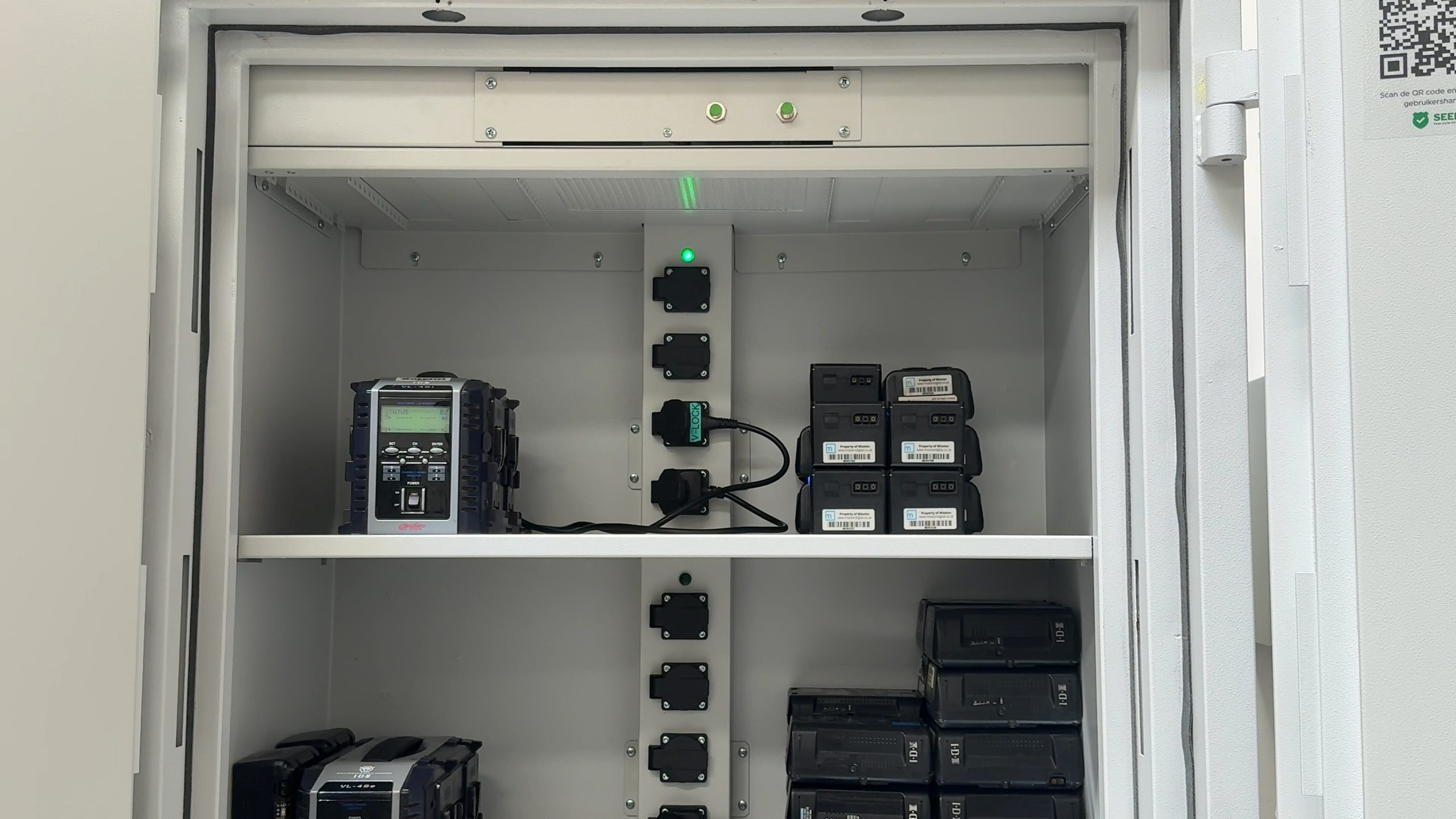
Safe-ion Battery Safe
Mission Digital’s Head of Operations Thomas Rogers talked to us about their facility, and why they decided to put their trust in a Safe-ion battery safe.
Thomas Rogers: “I think before having the battery safe, my main concern with charging the batteries was an element of safety. Especially as we’ve all seen on the news there have been more and more Instances of lithium ion fires that are catching mainstream media attention. I haven’t read into all the articles, so I’m not claiming to know exactly what caused each one, and they may be using different level of build quality lithium batteries to us. We’re using professionally built V-lock batteries that have redundancy and safety built into them. So I would say that we have very low risk Lithium batteries in that sense, but you can’t put a price on safety. Our office is inside a studio lot, and it’s important to make sure both premises and staff members are safe. It’s about mitigating the risk of anything catastrophic happening by having it protected.”
Mission Digital uses a range of lithium-ion battery technologies to support productions on location and on set.
Thomas Rogers:
“Typically we use lithium ion V-lock batteries, which are small, compact, 12 volt or 24 volt batteries that are used to power accessories on set, whether they are going on to wireless video receivers or the backs of monitors or things like that. We also use some 240 volt AC batteries, like Ecoflows that are able to power the carts that we send out on set. The carts are much more power hungry, so they require bigger batteries that can output AC voltage as opposed to lower DC voltage.”
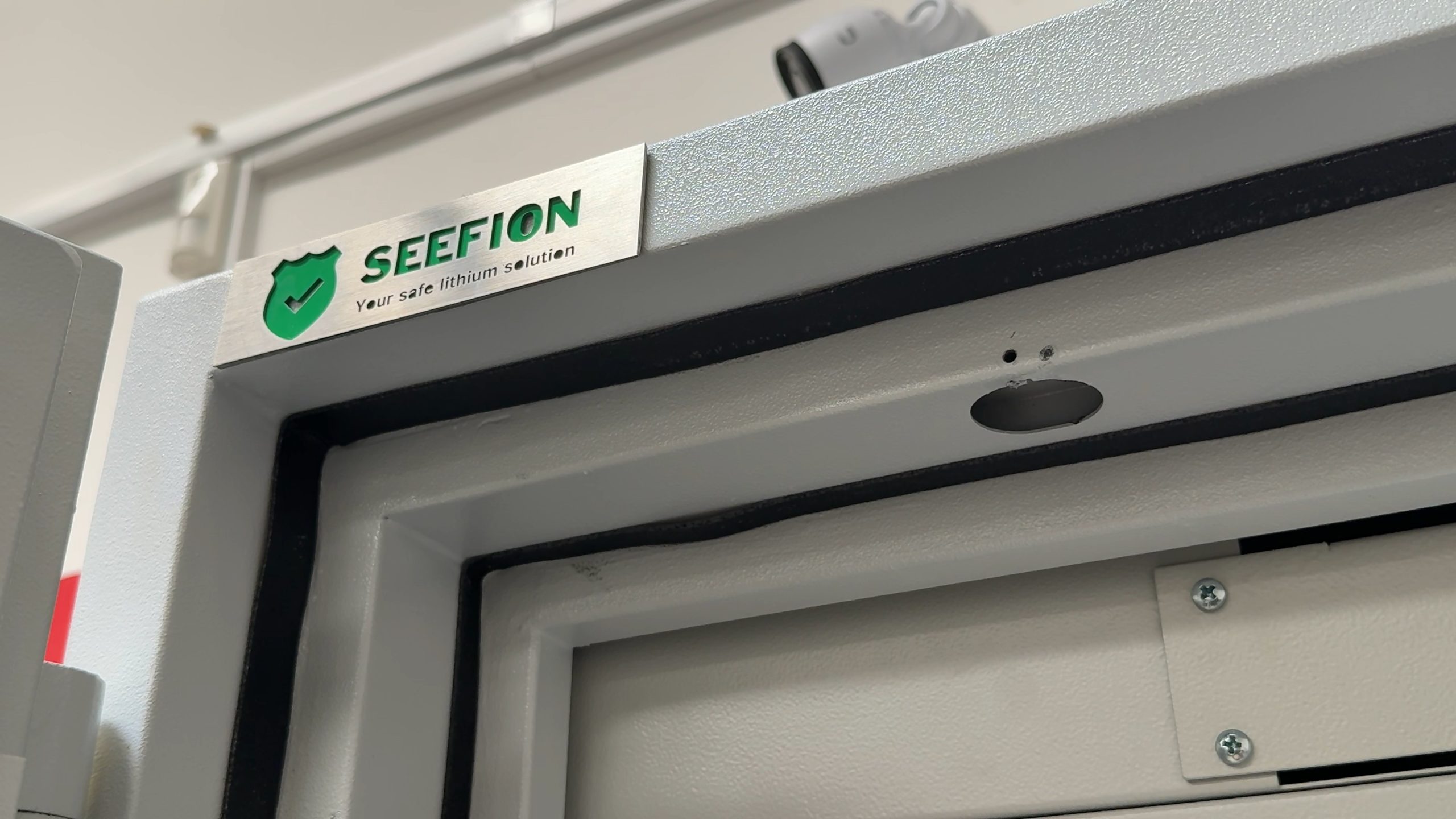
Safe-ion Battery Safe
Why Safe-ion?
Safe-ion battery safes are designed specifically for the storage and charging of lithium-ion batteries. The safes have been tested for lithium-ion battery fires and thermal runaway events, with systems designed to contain fire and overpressure within the safe itself. Features include integrated warning systems, fire-resistant construction, ventilation systems and the ability to connect to existing alarm infrastructure for immediate notification in the event of an incident. Safe-ion safes have also been tested by MPA Dresden during the development of the VDMA 24994 guideline for lithium-ion battery storage and charging.
One of the operational advantages for Mission Digital was the ability to integrate the Safe-ion unit directly with its existing building alarm system, ensuring incidents can be acted upon quickly even outside normal operating hours.
“One of the key features that I like of the Safe ion fire battery safe is that it comes with a cable that allows us to install it into our building alarm system, which means that if there was to be a fire out of hours or on the weekend, I would get a notification through our alarm system and then it can be acted upon and fixed as soon as possible. It’s that ability to know that I will be aware if anything goes wrong, no matter where I am” explained Rogers.
The Safe-ion safe is part of the team’s day to day routine now, but has it changed their perceptions of battery safety?
“The safe has changed how I think about battery safety because I think that when you buy professional grade or enterprise grade batteries, you come with an assumption that everything will be fine. You are buying good quality products with the assumption that they’re built to a higher standard and that nothing’s going to go wrong. But having the safe is a reminder that actually anything can happen. And it’s about putting safeguards in place so that should something go wrong, there’s protection” explained Rogers.
For Mission Digital, the Safe-ion safe has delivered more than protection alone. It has also removed uncertainty around charging schedules and battery availability.
Thomas Rogers: “It’s peace of mind and operational optimisation. I know that any risk of something happening is heavily mitigated, and I also know that we have the ability to put any battery on charge at any point, whether it’s half an hour before everyone leaves for the day or if something needed to be charged over the weekend. There is no worry in the back of my mind of always, oh it’s a bit risky. It’s put it in the safe whenever, wherever. It’s going to charge. It’ll be safe and it’ll be ready for when we need it.”
As lithium-ion battery use continues to grow throughout the film and television industry, Mission Digital sees battery safety as an essential part of operational resilience rather than simply a compliance exercise.
Thomas Rogers: “I would recommend getting a Safe-ion battery safe to anyone really. We use professional high grade lithium ion batteries in what we do and I see value in having this for many reasons, whether it’s safety, whether it’s operation, or whether it’s efficiency. At the end of the day, it’s one of those things that’s never a problem until it becomes a problem. You want to get ahead of that and make sure that should something go wrong, it’s safe, it’s contained and it’s not catastrophic.”
Latest IAMT News
IAMT Dynamic Software Licensing Group Launches Public GitHub Repository

IAMT Annual Conference & Awards 2026: first speaker announced

Sign-Up Here
Industry news, event updates and more. Sign-up for the IAMT Newsletter.