
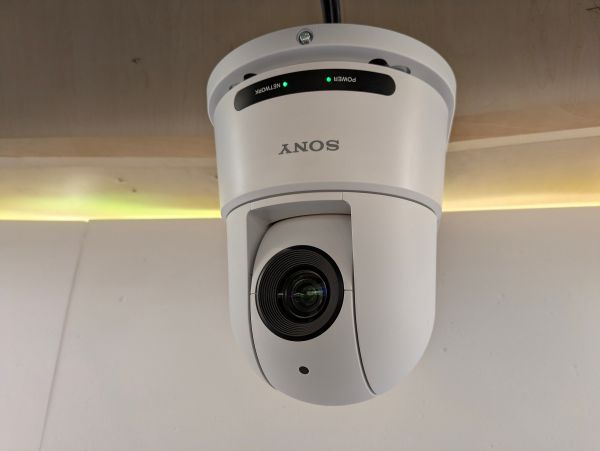
Sony – Beyond Broadcast: How Media Technology Empowers Creativity, Communication and Collaboration

Peter Sykes, Strategic Technology Development Manager at Sony Europe
The definition of a “broadcaster” has changed dramatically over the last few years. We now see CEOs live-streaming quarterly results to global workforces, universities delivering hybrid lectures across time zones, and YouTubers running multi-camera setups with the audio-visual polish audiences expect from any premium platform.
Each of these can be considered broadcasting, drawing upon the production technology, techniques and skillsets rooted in traditional radio and television. As our high-tech consumer lives drive up expectations in the workplace, and professional media equipment becomes ever more accessible, the list of sectors adopting broadcast production values continues to diversify.
Convergence is in our DNA
Market convergence is not a new concept – and certainly not for Sony. With Sony Corporation celebrating its 80th anniversary this year, our teams have been reflecting on a rich heritage spanning the consumer space and all areas of Sony Professional: broadcasting, cinematography, large-scale live production, enterprise AV, and digital imaging for industry and healthcare. Core innovations – from color science, sensor and display technology to production workflows – have always run through every part of our business. I’m proud to say that expertise flows naturally between our consumer and professional divisions, and advancements in one field – such as AI or spatial content creation – quickly find cross-sector applications.
Let me give a historic example. In the early 1960s, Sony developed a transistorized videotape recorder at one-fiftieth the size of the studio machines of the day – and found enthusiastic customers outside of the broadcast sector. Launched in 1963 as the PV-100, it was adopted by hospitals, schools and, most memorably, by American Airlines and Pan American Airways in 1964, replacing unreliable film reels for in-flight entertainment. A dedicated dubbing facility near New York supplied fresh content each week. Unquestionably an enterprise use case!
Back to the present day, and we are seeing convergence advance strongly, as technology becomes steadily democratized and AI redefines the pace of disruption. Broadcast technology and enterprise AV is the most significant dimension of this – prompting the esteemed publishers of this Journal to drop the term ‘broadcast’ from the Association name in favor of ‘media tech’. You may also have noticed that Sony Media Solutions and Digital Imaging teams exhibited alongside our Professional Displays & Solutions colleagues at ISE from 2025, responding to strong demand for broadcast-grade tools across corporate, retail and education as well as production.
Visual integrity
For some sectors, the reliable color accuracy of broadcast-grade equipment is a key driver behind its adoption. I recall a lecture years ago by an eminent surgeon working at the local hospital near to the Sony office in Basingstoke in the UK, an early adopter of HD for medical imaging. He pointed out the importance of accurate color capture and display during surgery, where subtle shades of red indicate blood oxygenation levels, and other colors reveal further vital signs of patient health.
In other applications, color science may not be a matter of life or death, but it is nevertheless a commercial imperative – particularly in fashion and beauty. Leading fashion houses are turning to broadcast and, increasingly, cinema-grade production to showcase their color artistry and creative vision. Sony’s collaboration with Stella McCartney began with the loan of 43 BRAVIA 4K Professional Displays for her Winter 2024 Paris Fashion Week show – chosen for their exceptional image quality in a challenging bright greenhouse environment, and for a shared commitment to sustainability.
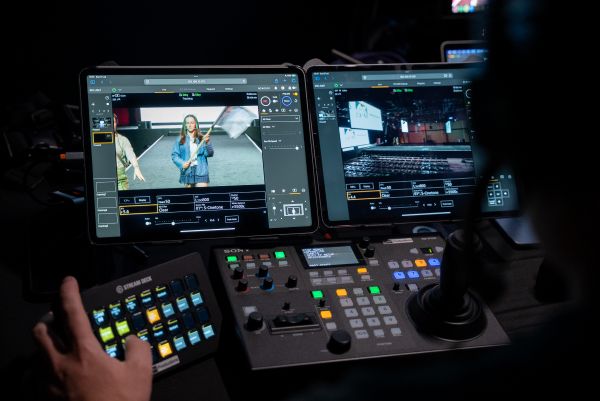
Similarly, global beauty brand Goldwell recently staged its Colour Vision event at Exhibition White City in London using five Sony BRC-AM7 PTZ cameras with AI-powered auto-framing.
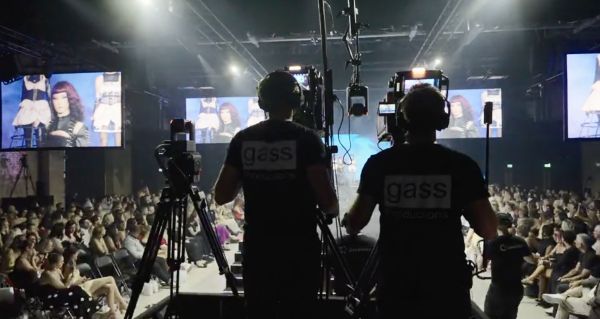
gass Productions delivered the event with just two camera operators, relying on auto-framing to track models on a crowded runway for 90% of the show. The results speak for themselves: high quality coverage, more floor space, increased seating and boosted ticket revenue. The BRC-AM7 is also a popular choice in lecture theatres, boardrooms and houses of worship, where the same intelligence allows a lean team to produce content that looks professionally directed.
Empowering Creators of All Sizes
It is the relative simplicity of much of the modern production toolkit that is democratizing professional and even cinema-quality broadcasting – whether streaming live events, creating commercial content, producing training materials or podcasts. Deep technical expertise is no longer a prerequisite. Subject recognition and real-time tracking hold focus automatically; auto white balance handles tricky lighting; PTZ fleets run remotely from a single control panel; software-based switchers like the M2L-X deliver live mixing and streaming without the need for a traditional gallery.
The workflow layer pulls it all together. Sony’s SDK lets teams automate camera control and define preset configurations, while the Monitor & Control app puts multi-camera oversight on a hand-held device – so a lean production team can operate with the efficiency of a broadcast crew.
Podcasters in particular are seeking kit that delivers professional performance with consumer-grade usability. No longer an audio format with optional visuals, podcasting requires the same craft as professional video production. Cinematic cameras like Sony’s Cinema Line are finding a natural home in corporate podcast studios across Europe, while consistent color science means multi-camera shoots match seamlessly without lengthy grading. Fittingly, IAMT itself came to Sony to guide their choice of cameras for its own podcast studio, which was first used at NAB to interview members for the IAMT Visual Podcast series.
Spatial content creation – where photorealistic 3D assets are created as the foundation of immersive environments – is another fast-developing technology already delivering real-world benefits. In virtual production, directors review and refine scenes in immersive 3D before stepping on set. Sony’s Spatial Reality Display is poised for wider roll-out across design, education, cultural heritage and retail – where it promises an exciting new era of customer engagement.
Authenticity at a Premium
The way in which an organization communicates internally, as well as externally, has a huge impact on staff engagement, satisfaction and productivity. Employees accept AI-generated content in the right context – routine training videos can now be generated in minutes. But audiences are highly sensitive to tone and authenticity, which puts a premium on human-generated storytelling.
Despite concerns over generative AI replacing roles in the industry, we are seeing new opportunities for the techniques and skillsets that trained broadcast professionals can offer. Corporations such as banks are scaling up internal production capability, recognizing that a well-produced leadership message directly influences employee and investor confidence. The all-staff Zoom call is no longer sufficient, and corporate job titles like Internal Communications Producer – and even Cinematographer – are appearing across LinkedIn. As Dan Radford, CTO at Gass Productions, put it after the Goldwell event: “The AM7 cameras have revolutionized the way we work. The AI tracking doesn’t replace us, it empowers us to be more creative.”
Interestingly, the corporate drive to professionalize content also presents new opportunities for the creator economy – a generation that instinctively understands audience engagement, visual storytelling and digital distribution, and is now bringing those skills in-house.
The scale and energy of ISE this year shows just how vibrant our industry has become – and how comfortably once-disparate worlds now share the same floor. From immersive retail experiences and hybrid workplaces to next-generation corporate communications and live events, professional media technology is empowering people everywhere to produce richly immersive, spatial and engaging content – founded on the ‘broadcast’ production values audiences now expect as standard.
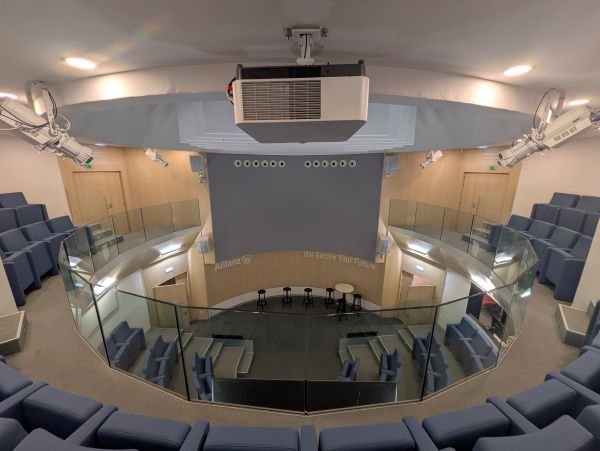
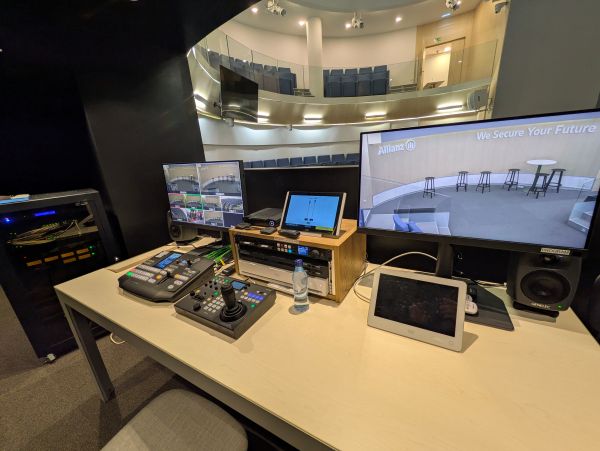
Allianz Portugal recently installed a new audiovisual solution into its auditorium, a space designed for conferences and events that now features video conferencing and live streaming capabilities. The system was based around Sony PTZ cameras and other equipment.
Latest IAMT News
Globecast Demonstrates Content Exchange Latest Capabilities at SPORTEL Monaco 2026

Beam Dynamics Appoints Brian Mauger as Regional Sales Manager, North America

Sign-Up Here
Industry news, event updates and more. Sign-up for the IAMT Newsletter.