
Xperity – The Next Standard for Media Product Delivery
As AI becomes part of the operational core, broadcast and streaming organizations need a new approach to software delivery intelligence.

Amit Yadav, Senior Vice President of Engineering, Xperity
Media organizations building software for broadcast, streaming, and digital platforms already operate in one of the most demanding environments in technology. Their systems must support live events, highly reliable streaming, complex rights and monetization models, and continuous product evolution without disrupting production.
Now AI is raising the stakes.
AI is no longer confined to experimentation or isolated workflows. It is increasingly embedded across software development, metadata enrichment, personalization, advertising, analytics, and operations. McKinsey notes that AI has the potential to fundamentally transform software product development by increasing both speed and quality, while DORA’s 2024 research highlights the growing impact of AI on software delivery and the increasing importance of platform engineering in complex environments.
For media executives, this creates a new challenge. The same technologies that promise acceleration can also introduce new dependencies, new operational risk, and new failure modes. In an industry where delivery errors can quickly become public and commercially damaging, that is not just an engineering issue. It is a business issue.

AI Is Accelerating Delivery — But Also Expanding Risk
The benefits of AI are real. Engineering teams can use it to speed feature development, generate tests, improve incident analysis, and automate parts of the delivery workflow. In parallel, AI is being embedded directly into media products and operations — from metadata enrichment and recommendation engines to ad optimization and workflow automation. Deloitte notes that generative AI is already reshaping media and entertainment workflows, while PwC points to AI’s growing role in helping media organizations securely create and deliver intellectual property while responding to shifting consumer behavior.
But acceleration without context is a dangerous trade.
Media software environments were already complex before AI. They typically connect content systems, metadata pipelines, rights services, monetization platforms, analytics, playback systems, CDNs, and third-party technologies, often across multiple customers, regions, and deployment models.
AI adds another layer of complexity. A model update, a prompt change, or a new metadata field can influence discovery, monetization, moderation, compliance, and user experience in ways that are not always easy to predict. And because no two customer environments are exactly alike, software teams are often managing not one product, but many variations of the same platform at once.
That is where delivery begins to slow.
The Cost of Missing Context
In complex media environments, the biggest delivery bottleneck is often not coding. It is rebuilding context.
Before teams can safely release changes, they need to understand what has changed, which systems are affected, which customers may be exposed, how risk could propagate, and what historical decisions still matter. That work is frequently spread across code repositories, tickets, architecture documents, pipelines, chat threads, and institutional memory.
The result is execution drag: the hidden tax of constantly reconstructing what the organization already knows.
As AI adoption increases, execution drag becomes more serious. AI can accelerate change, but it can also accelerate the introduction of subtle errors, hidden dependencies, and operational surprises. DORA’s broader research direction reinforces this point: AI acts as an amplifier, strengthening well-functioning systems and exposing weaknesses in fragmented ones.
For media organizations, where failure can impact uptime, ad revenue, compliance, and customer trust, that matters enormously.
Why Delivery Intelligence Matters
This is why a new approach is emerging: delivery intelligence.
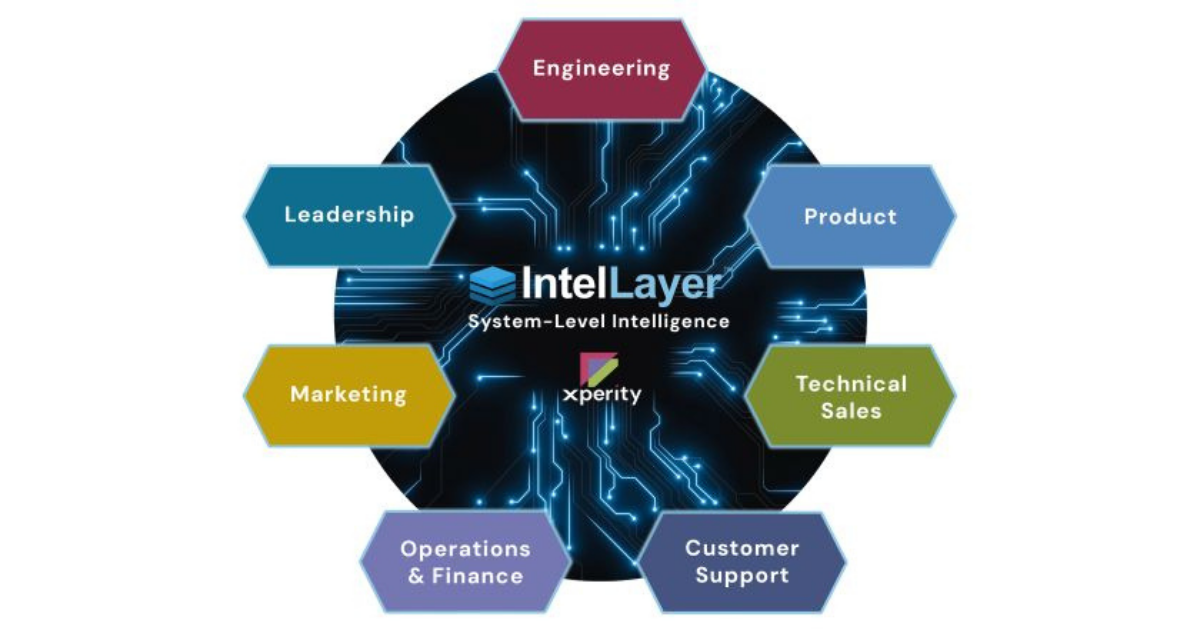
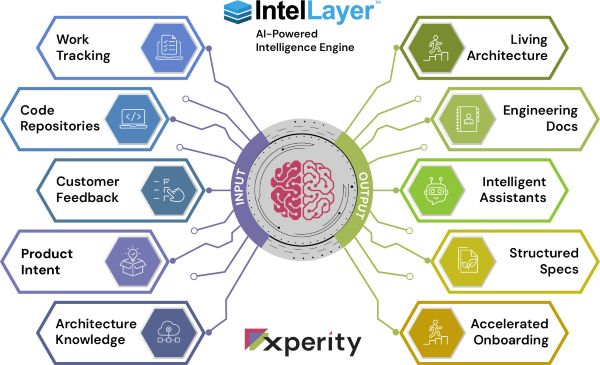
IntelLayer™ is Xperity’s delivery intelligence layer for modern software engineering. It continuously captures fragmented signals across the Software Development Life Cycle — including code, work tracking, architecture artifacts, CI/CD pipelines, operational signals, and communication and turns them into structured, persistent engineering intelligence.
Rather than forcing teams to manually reconstruct context before every initiative or release, IntelLayer preserves and organizes system knowledge as the platform evolves. It creates a living view of how services, features, dependencies, decisions, and outcomes connect. That context can then be continuously synthesized into useful artifacts such as requirements, specifications, architecture documentation, operational knowledge, and decision history.
This matters because intelligence does not come from raw data alone. It comes from relationships.
In practice, that means teams can assess impact faster, understand dependencies more clearly, improve delivery traceability, and create a much safer foundation for AI-assisted or AI-executed work.
What This Means for Media Leaders
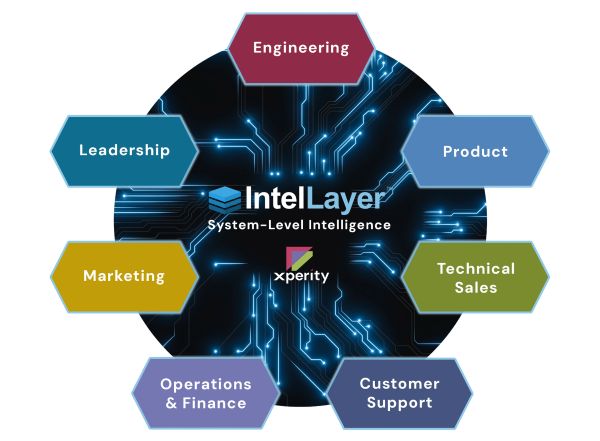
For executives and directors responsible across product, technology, operations, and revenue functions, the strategic issue is straightforward: AI is becoming part of the operational core of media platforms, not just an enhancement at the edges.
Deloitte’s 2026 media and entertainment outlook goes further, arguing that generative AI should increasingly be treated as core infrastructure rather than as a limited experiment.
If that is true, then delivery systems must evolve accordingly.
Over the next three to five years, media organizations should expect more AI embedded in software delivery workflows, more model-aware release practices, more automated reasoning about change impact, and more pressure to prove governance, traceability, and reliability. Without persistent system understanding, those capabilities will remain powerful but blind.
That is why delivery intelligence is becoming foundational.
A New Standard for Media Product Delivery
The organizations that benefit most from AI will not simply be the ones that adopt it fastest. They will be the ones that can use it with control, grounding speed in system understanding, and automation in architectural reality.
For media product teams, that means moving beyond fragmented knowledge, tribal memory, and increasingly fragile release processes.
It means building a delivery model where knowledge is continuously captured, structured, preserved, and reused.
That is the shift the Xperity IntelLayer is designed to support.
In a market where reliability drives trust, and trust drives growth, eliminating execution drag is no longer an internal optimization. It is becoming a strategic requirement for media product delivery.
Latest IAMT News

Globecast Demonstrates Content Exchange Latest Capabilities at SPORTEL Monaco 2026

Beam Dynamics Appoints Brian Mauger as Regional Sales Manager, North America

Sign-Up Here
Industry news, event updates and more. Sign-up for the IAMT Newsletter.