
Ross Video – Redefining Value: How MediaTech Is Transforming Organizational Communication

Bryan Davies, Regional Sales Manager, Corporate, Ross Video
As MediaTech suppliers expand into new areas of opportunity, a clear pattern is emerging. Growth is increasingly tied to how effectively video and audio technologies support communication as a core business function. What was once considered a specialist capability is now embedded across organizations, shaping how they engage, align, and create value.
This reflects a broader shift in expectations. Video is no longer an occasional tool. It sits at the center of how organizations communicate, from internal town halls to investor updates and hybrid events. Audiences expect clarity, consistency, and a level of visual impact regardless of where they are joining from. In this environment, delivery carries as much weight as the message itself, and the ability to meet that expectation consistently has become a differentiator.
For companies like Ross, the opportunity is not simply to extend technology into new environments, but to help organizations unlock more value from it. This means enabling communication to become more scalable, more efficient, and in many cases, commercially impactful. It also means recognizing that broadcast and AV are no longer distinct domains, but part of a unified approach to professional communication at scale.
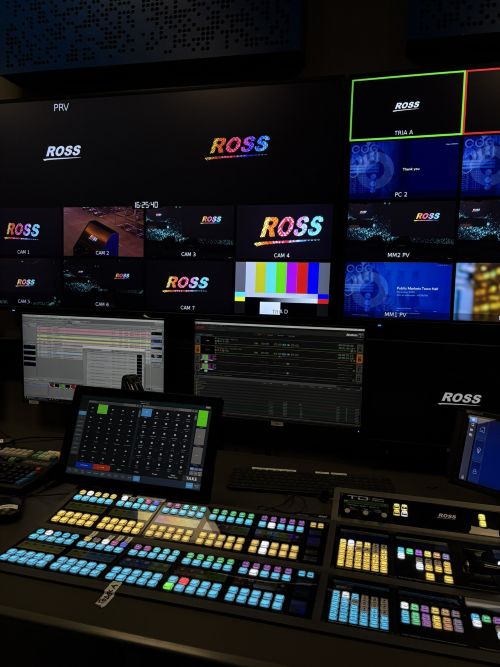
One of the most visible expressions of this shift is the rise of in-house video production environments. Organizations are moving away from outsourcing key corporate communication moments and instead building internal capability that gives them greater control over timing, messaging, and brand consistency. These environments are no longer viewed as technical upgrades. They are strategic assets and business imperatives
A global financial services organization provides a strong example. By investing in dedicated production facilities and adopting structured workflows, they reduced reliance on external production teams while significantly improving operational efficiency. What once required large crews can now be managed by small, agile teams, enabling more frequent and responsive communication. Importantly, these spaces also introduced new commercial potential, with facilities being used beyond internal needs to generate additional revenue.
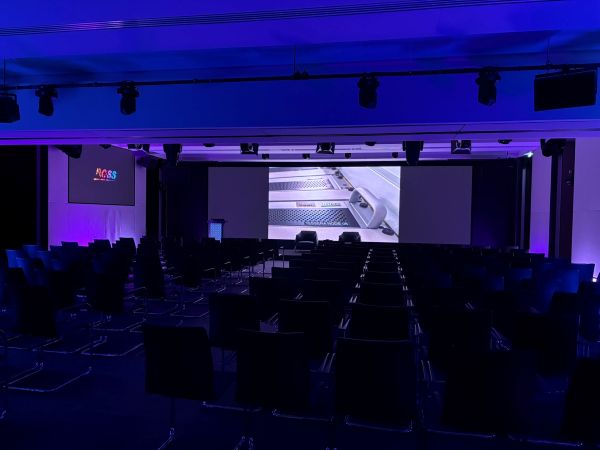
This idea of infrastructure as an asset, rather than a cost, is becoming central to how organizations think about MediaTech. Purpose-built environments are designed not just for single use cases, but to support a wide range of outputs including live events, streamed content, and recorded productions from the same core system. The result is a more efficient model, where fewer resources are required to deliver consistent, high-quality outcomes.
The same thinking is reshaping meeting and collaboration spaces. Hybrid participation is now assumed, and with it comes the expectation that meetings deliver clarity and context to both in-room and remote audiences. Simply connecting cameras and microphones is no longer enough. The focus is on creating structured, engaging communication experiences that reflect the importance of the message.
In public sector environments, for example, where transparency and understanding are critical, introducing production discipline into meetings can significantly improve how information is received and interpreted. It is not about increasing technical overhead, but about ensuring communication achieves its intended outcome.
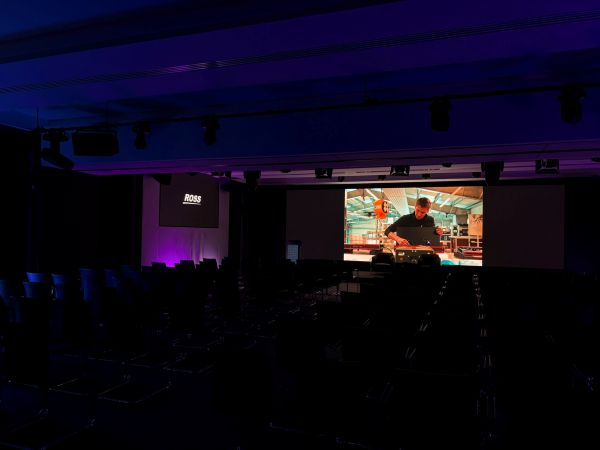
Event environments are also evolving. Rather than treating each event as a standalone production, organizations are investing in permanent infrastructure that supports repeatable, reliable delivery. This reduces operational risk, lowers long-term costs, and creates the flexibility to scale output as needed. More importantly, it enables organizations to respond quickly to new opportunities without rebuilding processes each time .
Alongside efficiency, there is a growing emphasis on experience and engagement. Brand and experience centers, as well as large-scale public installations, demonstrate how MediaTech can create deeper connections with audiences. These environments are designed to deliver consistent, immersive experiences that reinforce identity and build understanding at scale.
Underpinning all of this is a convergence of technologies and workflows. Integrated systems, often combining elements of broadcast, AV, and IT, allow organizations to operate with greater flexibility and resilience. While approaches such as IP-based infrastructure continue to evolve, many organizations are adopting hybrid models that balance innovation with stability, ensuring that systems remain reliable while still enabling future growth .
What connects these developments is a shift in mindset. Communication is no longer treated as a series of isolated events. It is an ongoing capability that requires the same level of investment and strategic thinking as any other core function. Organizations are prioritizing environments that deliver consistent impact, support multiple use cases, and provide long-term value.
For MediaTech suppliers, this creates a clear direction. Success will come from enabling organizations to do more with their communication, not just improving how it looks or sounds. That includes helping them operate more efficiently, respond more quickly, and in some cases, unlock new revenue streams from the same infrastructure.
Ultimately, the role of MediaTech is expanding. It is no longer just about enabling production. It is about enabling organizations to communicate with purpose, consistency, and measurable impact.
Discover how Ross helps organizations create repeatable, dependable environments built for high-stakes communication here: https://www.rossvideo.com/industries/corporate/
Latest IAMT News

IAMT CEO, Saleha Williams, to speak on CNN Global Perspectives Doha
Amagi powers KT Studio Genie’s global micro-drama expansion

Sign-Up Here
Industry news, event updates and more. Sign-up for the IAMT Newsletter.