Limecraft – When 24 Cameras Roll, Post Can No Longer Wait
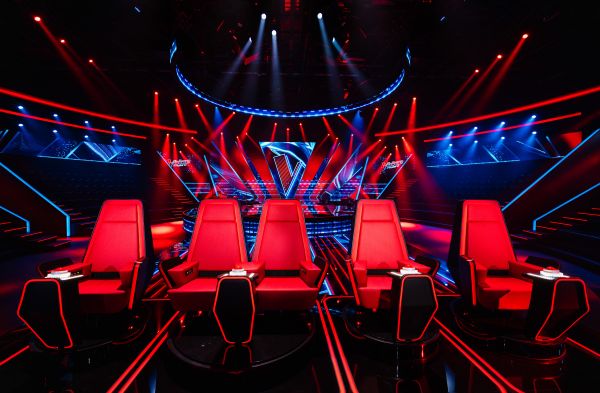
How Limecraft and NEP Europe are reshaping high-volume entertainment production for ITV Studios’ The Voice of Holland
In large studio entertainment, the cameras may stop rolling at the end of the day. The pressure does not. Shows such as The Voice generate the kind of production volumes that expose the limits of traditional post workflows: up to 24 camera feeds, multiple audio sources, and ten-hour shoot days, all producing material that needs to be screened, logged, structured and prepared for edit at speed. The creative ambition is high, the turnaround unforgiving. The number of files in play leaves no room for delay or error.
The Challenge
For years, that gap between capture and editorial was bridged through sheer manual effort. Assistants screen growing piles of footage, compare notes, identify highlights, build multicam sequences, prepare string-outs and pre-cuts, and try to ensure that no key moment is missed. It works, but at a cost. It is labour-intensive, prone to errors, and hard to scale.
This is the problem Limecraft and NEP Europe set out to solve. NEP has long supplied studio, multi-camera and post-production facilities for clients such as ITV Studios and was looking for a partner to strengthen its post-production platform with what is now known as the NEP Automated Live Entertainment workflow.
The exclusive partnership, initially developed around ITV Studios’ The Voice of Holland, reflects a simple but urgent reality in modern entertainment production: when production happens at scale, post-production can not begin after recording has finished. It has to start at run time.
While the joint platform is designed for maximum efficiency in post-production for live multicamera facilities, with The Voice of Holland as the initial deployment, it is indicative for a wider change in how high-volume entertainment formats will be produced in the years ahead. Studio shows generate more material than editorial teams can realistically process through manual methods without creating delay, duplication, or avoidable risk. Logging, syncing, pre-cutting and timeline preparation are necessary, but none of them is where the creative value of the edit truly lies. The more time people spend preparing material, the less time they spend making editorial decisions.
The Limecraft-NEP approach delivers automation designed to curate context, structure and editorial usefulness upstream, so that editors receive material that is readily organised rather than merely available.
How Does it Work in Practice?
In practice, automation starts at ingest. Limecraft processes growing files recorded on EVS, making material accessible while recording. In high-pressure entertainment environments, that changes the cadence of post completely. Instead of waiting for files to close and transfers to complete, teams can start screening and validating content instantly.
From that point onwards, Limecraft drives a Telestream encoding farm and complements it with specialised processing of BWF audio files. Large productions need reliability and repeatability across many inputs. Automation at this stage eradicates manual handling, lowers the risk of errors, and ensures that technical preparation does not impose bottlenecks downstream.
The real step change comes when technical ingest is combined with live production intelligence. That is why Limecraft integrated the Live Timecode Notes app from editingtools.io, injecting live set notes directly into the platform as structured metadata. Those notes are attached automatically to matching clips. The effect is immediate: notes are visible as soon as material arrives, reducing interpretation, manual logging and loss of context. Further to these, Limecraft added a pipeline of fine-tuned AI services to meaningfully enrich the material.
This level of integration matters because otherwise useful editorial context may be created early on but captured in ways that are disconnected from the media itself: in notebooks, chat messages, spreadsheets or separate logging tools. By the time such information reaches post, part of its value has been lost. Integrating live notes and AI directly in the workflow preserves intent while production unfolds.
The Point Is not Novelty, but Reducing Friction
In high-volume operations, the cumulative burden of small manual tasks is enormous. Every clip identified by hand, every note re-entered, each timeline reconstructed manually in edit, adds time and introduces inconsistency. The purpose of AI in this context is not abstract, but disciplined automation applied to repetitive work at scale.
That becomes especially visible in the handover to editorial. Limecraft has long supported AAF export for complex multi-camera workflows, tagging material, metadata mapped to individual sequence tracks, multicam grouping and extended time-of-day-based auto-sequencing. The latest release took that one step further, by making AAF export template-based. This allows export logic to be defined once, and applied consistently across projects.
The Wider Lens
As a result, editors receive a structured multi-track timeline, delivered in a form that reflects editorial logic and can be used immediately.
That is where the partnership with NEP Europe is particularly important. Technologies like these only deliver value when shaped around practical realities of live. NEP Europe brings deep expertise in complex multicamera operations; Limecraft brings the automation layer that converts operational demands into scalable workflows.
For ITV Studios on The Voice of Holland, the business case is clear. Automated ingest reduces manual handling and the associated risk of error or material loss. Early access to growing files, enriched by live notes and AI-based logging, accelerates the identification and validation of highlights. Automated pre-cutting and structured Avid handover move repetitive preparation work out of the edit suite and into the workflow itself.
The outcome is measurable: a 60% reduction in the time required in the edit suite for preparation and pre-cutting, alongside faster access to relevant content and a substantial reduction in manual workload.
That is the larger significance of the Limecraft-NEP Europe partnership. It shows that in high-volume entertainment, the future of post is not about working harder on more material. It is about ensuring that by the time content reaches the edit, much of the heavy lifting has already been done. Not by replacing editors, but by finally allowing them to edit.
Latest IAMT News

IAMT CEO, Saleha Williams, to speak on CNN Global Perspectives Doha
Amagi powers KT Studio Genie’s global micro-drama expansion

Sign-Up Here
Industry news, event updates and more. Sign-up for the IAMT Newsletter.