Etere – Creativity Needs Orchestration: What Automation is Really Changing in Media Jobs

Alex Gattari, AI Solutions Architect, Etere
The media industry is entering a phase where “automation” no longer means just faster playout or fewer manual handoffs. The next wave is about orchestration: systems that coordinate people, tools, formats, and platforms so creators can spend more time making decisions that matter—and less time duplicating metadata, or rebuilding the same workflow.
We’ve been living this shift in real projects: Evaluating AI models against broadcast realities, expanding publishing pipelines for audio-visual radio, preparing the ecosystem for 8K, and removing infrastructure friction so teams can work where they are. Together, these initiatives point to a clear conclusion: Automation will reshape jobs in content creation and production, but the most valuable roles won’t disappear.
The New Baseline: Creative Output is Now Multi-Format by Default
Creators and production teams are being asked to do more than “make a programme.” A single idea now becomes a package: Long-form, social posts, podcast feeds, and sometimes live/interactive variants. The creative challenge is no longer only the story, but how the story travels across platforms and contexts without losing identity.
Orchestration tech changes the economics of that packaging. When publishing steps are automated—conversion, normalization, scheduling, distribution—the bottleneck shifts away from technical labor and back towards creative intent: what to publish, when, where, and why.
Visual Radio is a Perfect Example of Creativity Boosted by Automation
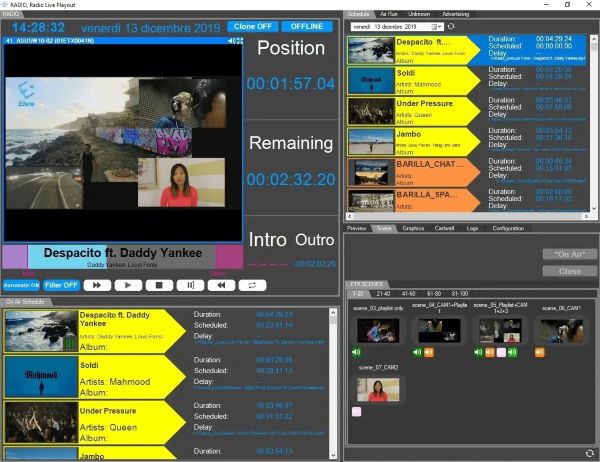
Etere Radio-Live: Orchestration turns audio-first production into a multi-format experience without adding complexity
Radio has always been “content-first,” but audiences increasingly consume audio through screens. Visual radio is a response to where attention lives. The creative promise is obvious—more identity and engagement, but the production fear is also obvious: “Who is going to run video, graphics, and live feeds while also running the show?”
This is where orchestration matters. When the system synchronizes audio and visuals, handles conversion and distribution, and supports metadata-driven switching between video, stills, and live feeds, the creative team gains options without adding complexity. When no video is available, default visuals keep the experience consistent instead of forcing a scramble.
The job impact here is nuanced. Automation doesn’t remove the need for producers—it changes what producers do. Instead of acting as human “glue” between tools, producers become experienced designers: planning segments, deciding what the audience sees, and making real-time calls that match the tone of the moment. The work becomes closer to live storytelling than media operations.
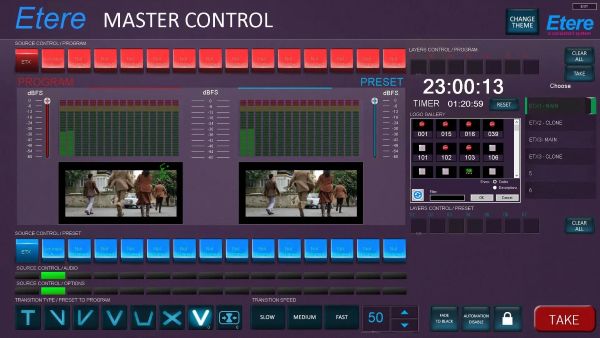
Automation is evolving from control panels to coordinated, end-to-end pipelines
AI Isn’t One Tool—it’s a Set of Trade-Offs
In 2026, one of the biggest risks is treating “AI” as a single capability you can buy once and deploy everywhere. In reality, different models behave differently across tasks, especially when you test them against workflows that resemble production, not demos.
A recent internal comparison across leading models focused on practical tasks: Writing short-form articles, fact-checking, creating image prompts, and creating video shorts from long-form material. The outcome wasn’t AI “wins” or “fails.” It was a map of strengths and weaknesses—useful because it showed where human oversight remains essential and where automation can safely take the first pass.
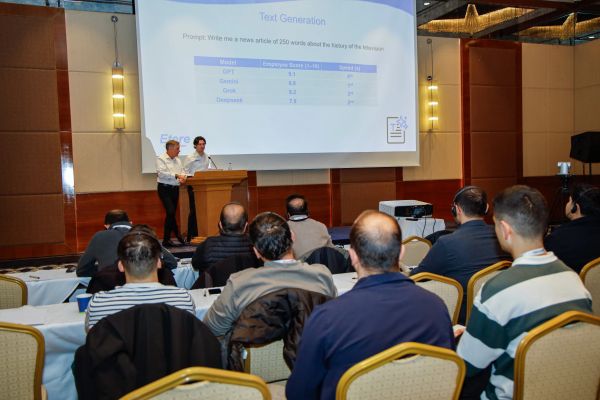
Reality-based testing: Evaluating AI where it matters—inside production tasks and constraints
This directly affects jobs. The future isn’t “one editor replaced by one prompt.” The future is creative teams working alongside AI as an accelerator—with humans acting as:
- Brief writers (defining goals, constraints, and brand voice)
- Quality controllers (checking accuracy, compliance, and tone)
- Assembly editors (shaping multiple AI outputs into a coherent narrative)
- Policy owners (deciding what is allowed, what is logged, and what must be reviewed)
8K Readiness is an Orchestration Story, Not Just a Resolution Story
When people hear “8K,” they often imagine a simple step-change in picture quality. But production teams experience it differently: more demanding real-time processing, more storage pressure, more points where the workflow can break.
Supporting 8K across an ecosystem is about where computation happens and how it’s coordinated. Real-time operations (playout, preview, recording) can leverage GPU acceleration, while non-real-time operations (management, scheduling, archive) remain viable on CPU infrastructure. That preserves existing investments and lets organizations introduce 8K without an all-at-once rebuild.
Infrastructure Friction is Creativity Friction
It’s easy to forget how much creative momentum is lost when systems are hard to operate or hard to maintain. Compatibility choices—like database and OS support—sound like backend details, but they influence whether teams can collaborate smoothly and whether distributed staff can access tools reliably.
Enabling MS‑SQL compatibility on Linux is the kind of change that doesn’t make headlines, but it matters. It increases flexibility in deployment strategies, supports teams that standardize on Linux environments, and can improve uptime and operational stability.
When infrastructure is more adaptable, creativity scales more easily.
So…What Happens to Jobs?
The next wave of automation will reduce demand for repetitive tasks: manual conversions, routine publishing steps, basic first‑pass clipping, and “human middleware” roles that exist only because systems don’t talk to each other.
Conversely, it will increase demand for roles that combine creativity with orchestration:
- Storytellers: People who understand the audience journey and map content outputs accordingly.
- Creative technologists: The bridge between editorial intent and technical capability (templates, rules, automation).
- Systems thinkers: Engineers who design resilient pipelines and make the complex feel simple.
A Practical Takeaway
If you want automation to boost creativity instead of breaking culture, measure success with three questions:
- Did we remove busywork from creators’ days?
- Did we reduce friction between teams (creative, ops, engineering)?
- Did we increase the number of high‑quality choices available—without sacrificing trust and accuracy?
When the answer is yes, automation becomes what it should be: A creativity multiplier.
Latest IAMT News
IAMT CEO, Saleha Williams, to speak on CNN Global Perspectives Doha
Amagi powers KT Studio Genie’s global micro-drama expansion

Sign-Up Here
Industry news, event updates and more. Sign-up for the IAMT Newsletter.