dzjinius: Ending the Fragmentation of Production
Somewhere in the shift from the edit suite to the cloud, the modern production lost its centre of gravity. The work itself has never been more ambitious: more episodes, more formats, more platforms and more partners. Yet the systems meant to hold it together have splintered into a sprawl of disconnected tools. One application handles the script, another the schedule, a third the budget, a fourth the casting. Wherever those tools fail to meet, spreadsheets, messaging apps and handwritten notes rush in to fill the gap. A production is rarely a single, coherent entity anymore; it is a story told in fragments, scattered across islands of software that were never designed to speak to one another.
dzjinius, the all-in-one production management platform built by Belgium-based DzjinTonik NV, was founded on a simple but stubborn conviction: that this fragmentation is not an inevitable cost of going digital, but a problem to be solved. Where the market offers a catalogue of point solutions, each one expert at a single slice of the pipeline, dzjinius sets out to do something the rest of the industry has largely avoided. It brings the full pre- to post-production chain together inside a single data model and gives every team member one version of the truth across every production they run.
One Version of the Truth
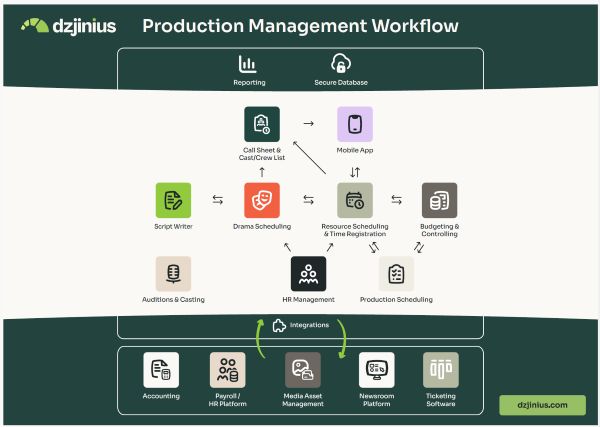
The principle that anchors the platform is deceptively plain. Most competitors cover one stage in isolation with scripting, scheduling or budgeting and leave the seams between them as someone else’s problem. dzjinius covers the whole chain on one shared dataset. Production information is no longer marooned in scripts in one tool, schedules in another and budgets in a third; every department works from the same, continuously updated source. Resource scheduling, production scheduling, drama scheduling, scriptwriting, budgeting and controlling, auditions and casting, call sheets and reporting all live inside the same environment, and open APIs let a growing ecosystem of partners plug straight into it.
This is more than a convenience. Each time an asset is exported from one incompatible system and imported into the next, context is stripped, errors creep in, and security and economic value quietly erode. A single connected layer removes those handovers altogether — and with them, the technical debt that accumulates every time a production is forced to reassemble itself from scratch.
One Platform for Every Genre
Crucially, dzjinius is not built for a single corner of the industry. Drama, entertainment, news, sports and live events each carry their own production realities, and most organisations have historically run a different system for each. dzjinius is designed to absorb all of them in one platform, so customers no longer need a separate tool per genre.
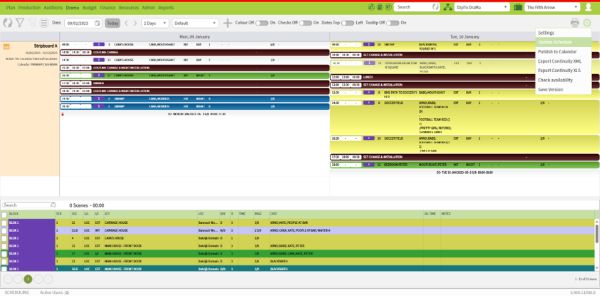
It is also designed to be adopted at a human pace. Rather than demanding a multi-year, big-bang transformation, dzjinius is modular and grow-as-you-go: customers start with the capabilities they need most and connect departments step by step. Behind that pragmatism sits a specialised team that has lived audio-visual production workflows for years, with reference customers across the UK, Ireland, Belgium and the wider EU.
The Hardest Test: Continuing Drama
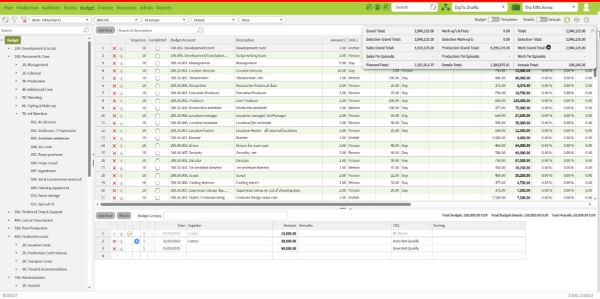
If a single format proves the case, it is continuing drama, one of the most demanding production challenges in television. A single show can deliver 200 to 300 episodes a year, the equivalent of around seventy feature films, all in motion at once. Storylines intersect across episodes, four to six units may shoot in parallel sharing talent, sets and crew, and scripts run through ten or twenty drafts while compliance rules around younger actors, sound and turnaround pile on constraint after constraint. In a fragmented toolchain, a single small error ripples through every department.
This is precisely the terrain dzjinius was built to tame. Storyline development, scriptwriting, drama scheduling, resource scheduling and production planning sit inside one environment, with script information captured as structured metadata. Editorial teams can verify narrative continuity, production teams can track talent and sets across scenes, and the same data flows into post-production without manual re-entry. It is no coincidence that dzjinius underpins some of the genre’s most demanding output, from ITV Studios’ Coronation Street and Emmerdale to RTÉ’s Fair City, Lime Pictures’ Hollyoaks and Warner Bros. ITVP Belgium’s Thuis.
Closing the Last Gap: dzjinius On-Set
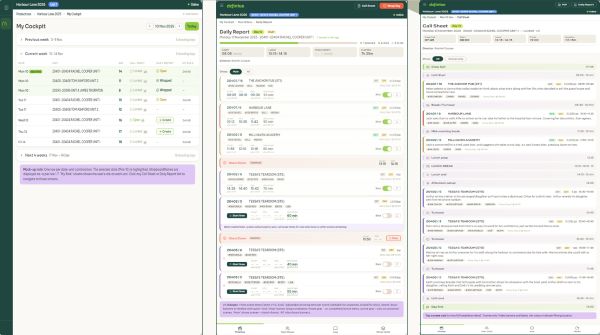
For all the structure a production office maintains, that structure has traditionally collapsed the moment information reaches the set, where teams fall back on spreadsheets, PDF mark-up tools and notes. Launched at MPTS 2026, dzjinius on-set is built to close that gap. A tablet-first application made for the studio floor (2nd Assistant Directors, Script Supervisors and Heads of Production), it links annotations and updates directly to live entities such as scenes, schedules and characters, rather than to a frozen snapshot of a document. Daily reports and scene-level information are captured as they happen, flow straight back into the system, and arrive in post ready to use. Built online-first with full offline capability, it is designed for the realities of locations with limited connectivity.
| Production teams have been forced to bridge the gap between office systems and on-set reality with manual workarounds for far too long. dzjinius on-set fundamentally changes that by connecting the studio floor directly to the production database. What happens on set is no longer lost, delayed or duplicated. It becomes part of a single, reliable source of truth for the entire production. — Christophe Haan, CEO, dzjinius |
From Prep to Post, on One Data Model
The argument dzjinius makes is, in the end, an argument against fragmentation itself. Professional rigour and ease of use need not be opposing forces, and production and the preservation of value need not be separate acts performed by separate tools. By holding the entire lifecycle of a work — casting, scheduling, scripting, shooting, post, distribution — on a single, connected data model, dzjinius offers an industry tired of stitching its own workflows together a quieter proposition: one place where the production stays whole, from the first casting clip to the final delivery.
More information: dzjinius.com
Latest IAMT News
Globecast Demonstrates Content Exchange Latest Capabilities at SPORTEL Monaco 2026

Beam Dynamics Appoints Brian Mauger as Regional Sales Manager, North America

Sign-Up Here
Industry news, event updates and more. Sign-up for the IAMT Newsletter.