
Grass Valley – Beyond Broadcast: Why MediaTech’s Next Growth Market is Enterprise AV


Jonathan Lyth, Product Director, Enterprise Media, Grass Valley
The traditional boundaries of the media industry are becoming increasingly difficult to define. For decades, professional video production sat largely within the domain of broadcasters. They owned the infrastructure, employed the specialists and produced the content consumed by everyone else. Today, however, some of the fastest-growing users of professional production technology operate far outside traditional media.
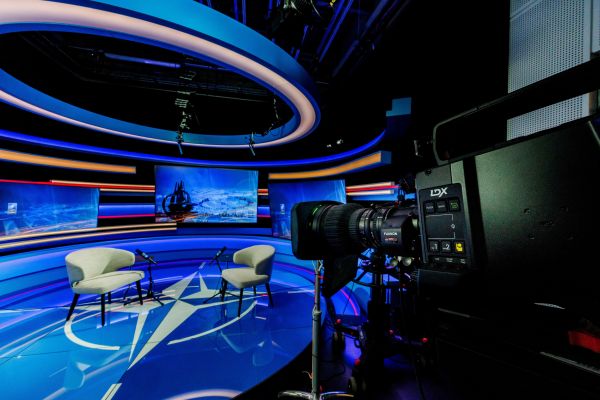
Global retailers are producing regular live broadcasts for employees and shareholders. Universities are building sophisticated sports production operations. Financial institutions are investing in studio environments for executive communications and investor relations. Government agencies are using video to engage increasingly distributed audiences. Across markets, organizations are discovering that video is no longer simply a communications tool. It is becoming a core operational capability.
The New Video Economy
Not long ago, most organizations treated video production as an occasional requirement. An annual conference might justify bringing in production resources for a few days but typically video played a relatively minor role in day-to-day operations.
Hybrid global workforces and changing audience expectations have created an environment where organizations communicate continuously. A keynote presentation no longer ends when the speaker leaves the stage. It is clipped for social media and repurposed for internal communications. The event itself increasingly represents the beginning of the content lifecycle rather than the end of it.
This is not unique to the corporate world. The same trend is visible across higher education, government, venues and live events. Universities that once focused exclusively on teaching now produce sports coverage, livestream lectures and promotional content. Event venues are expected to deliver experiences that extend far beyond the people physically present in the room. Even relatively small productions often generate content for social platforms, streaming services and on-demand distribution.
The volume of content being created continues to increase, but perhaps more importantly, so does its importance. Video is no longer a supplementary communications channel. In many cases, it has become the primary way organizations engage audiences.
The Rise of the Enterprise Producer
As organizations increase their reliance on video, they begin to encounter challenges that will sound familiar to anyone with a broadcast background. Producing one successful livestream is relatively straightforward. Delivering hundreds of productions across multiple teams, locations and audiences is something entirely different. Reliability matters most and the ability to maintain quality under pressure is a business requirement rather than a technical aspiration.
These organizations are not building television networks, nor are they trying to replicate traditional broadcast facilities. Their requirements are often shaped by smaller teams, and tighter resources, Yet they still need to create content that reaches disparate audiences and remains valuable long after the live production has ended.
at challenge is becoming more visible as video takes on greater strategic importance. Executive communications, corporate events, training programs and stakeholder engagement initiatives are increasingly judged by the quality of the experience they deliver. Audiences don’t pause to distinguish between content produced by a broadcaster and content produced by an enterprise. They simply see both as video experiences with a high minimum threshold to meet before disappointment kicks in.
Making Professional Production Accessible
Historically, professional production systems were designed for highly specialized environments operated by experienced technical teams. While that model remains essential in many parts of the industry, newer markets often require a different approach.
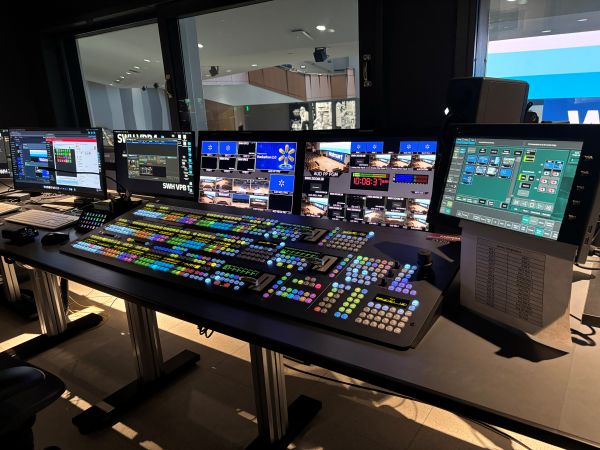
Enterprise users increasingly expect production technology to behave more like the wider IT environments they work with every day. Systems need to integrate with existing infrastructure and remain manageable for teams that may not have deep broadcast engineering expertise.
he same time, expectations around quality continue to rise. Audiences compare directly with the media experiences they consume elsewhere. They do not distinguish between corporate content and professional content. They simply expect both to work. This is where the industry is beginning to see a convergence of requirements. The resilience and production expertise developed within broadcast are becoming relevant to a much wider audience, while advances in software, IP connectivity and cloud-enabled workflows are making those capabilities more accessible than ever before.
Beyond Media
For the professional video industry, the most important market opportunity may no longer sit exclusively within media and entertainment. Video has become a strategic asset for organizations of every type. As audiences continue to expect richer, more engaging and more immediate experiences, the need for dependable production infrastructure will only increase.
The next generation of growth will not be driven solely by broadcasters producing more content. It will come from organizations that have realized video is now central to how they communicate. Many of them may never think of themselves as media companies, but they are increasingly facing the same production challenges – and looking for the same professional solutions.
Latest IAMT News
Globecast Demonstrates Content Exchange Latest Capabilities at SPORTEL Monaco 2026

Beam Dynamics Appoints Brian Mauger as Regional Sales Manager, North America

Sign-Up Here
Industry news, event updates and more. Sign-up for the IAMT Newsletter.