Lawo and the Dynamic Media Facility
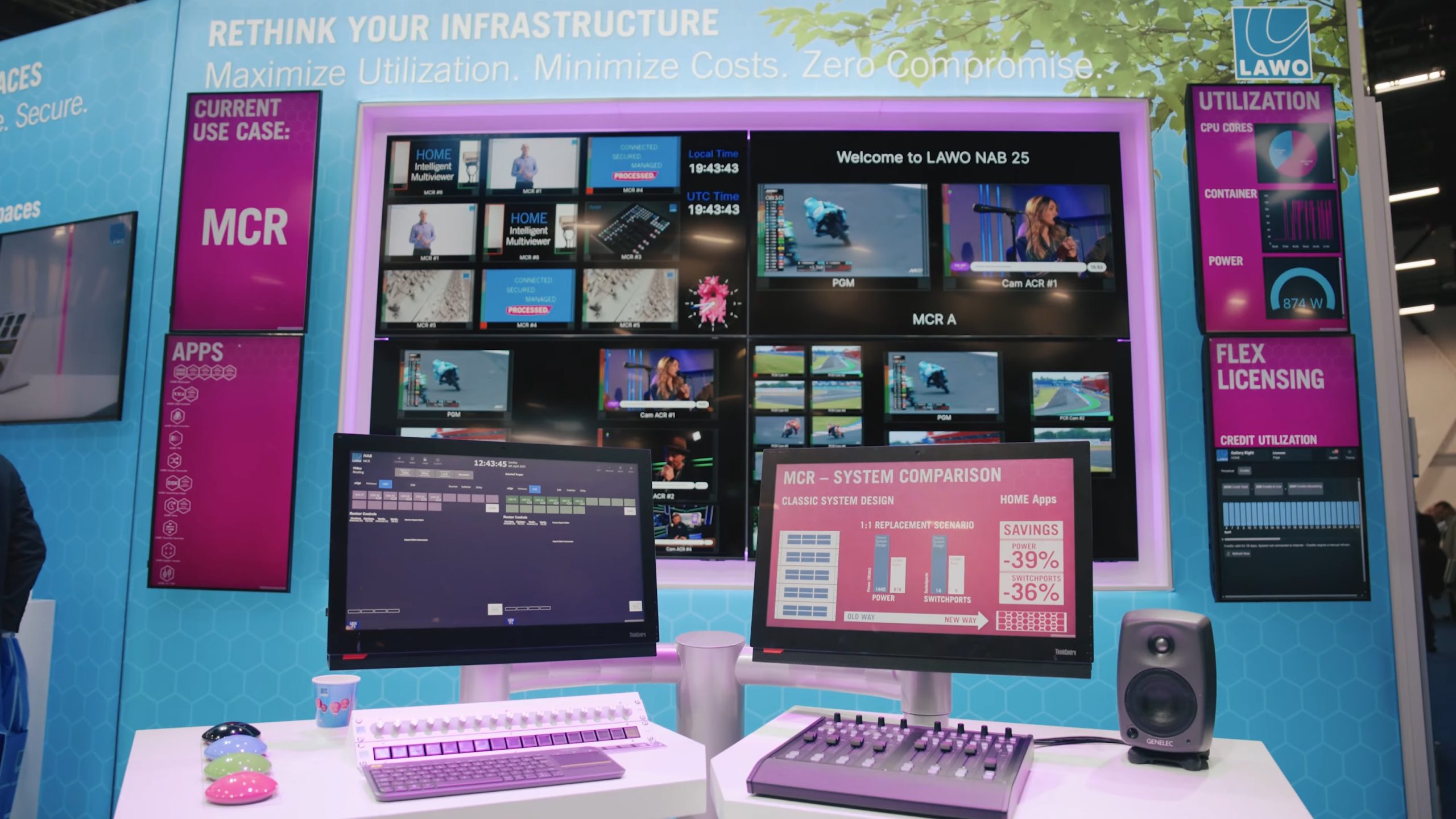
Two weeks after the European Broadcasting Union (EBU) released its white paper on the Dynamic Media Facility, Lawo introduced HOME Apps—a rapidly expanding series of audio and video processing apps that run on standard COTS servers. While the timing of these two events was pure coincidence, it immediately positioned Lawo as a vendor that wholeheartedly embraces the Dynamic Media Facility (DMF) principles by allowing users to instantly start and stop processing apps. The aim is to allow operators to totally reconfigure their entire technology stack as frequently as necessary, even several times a day if necessary.
While a similar approach is possible by pooling bespoke processing devices via IP-based resource pooling, it still requires more hardware than a COTS server-based strategy. Yet, the EBU rightly concluded that vendors of broadcast and AV processing tools would be wise to rely on IT giants for the processing capability as they are much better placed to develop increasingly powerful servers at prices broadcast vendors could never match.
The DMF principle helps users avoid overspending on dedicated hardware that may only be needed at very busy times. Processing apps can all live on the same server or in the cloud, irrespective of whether they are audio, video or conversion apps. Even operators who prefer to use servers on-premise or in networked private clouds are surprised by the space reduction and significantly lower power consumption of this approach. Cloud operation is obviously part and parcel of the DMF initiative.
An important step for the DMF will be the ability to run apps from different vendors on the same server, so that users are free to choose best-of-breed solutions irrespective of who develops a given app. In parallel, to avoid unnecessary latency caused by encapsulating and decapsulating media that is passed on among apps, a Media eXchange Layer (MXL) is being developed as an open-source project, which is based on a shared-memory structure to which apps output the result of their processing and from where other apps derive the media they need to process next. In time, this approach will also allow servers to exchange media with other servers via RDMA (Remote Direct Memory Access), which extends the shared-memory concept to entire server clusters.
Lawo and several other vendors as well as broadcasters and organizations such as the Linux Foundation, the EBU (European Broadcasting Union) and NABA (North American Broadcasters Association) are jointly working on the SDK that will deliver MXL and, ultimately, the Dynamic Media Facility as envisaged by the EBU.
Latest IAMT News
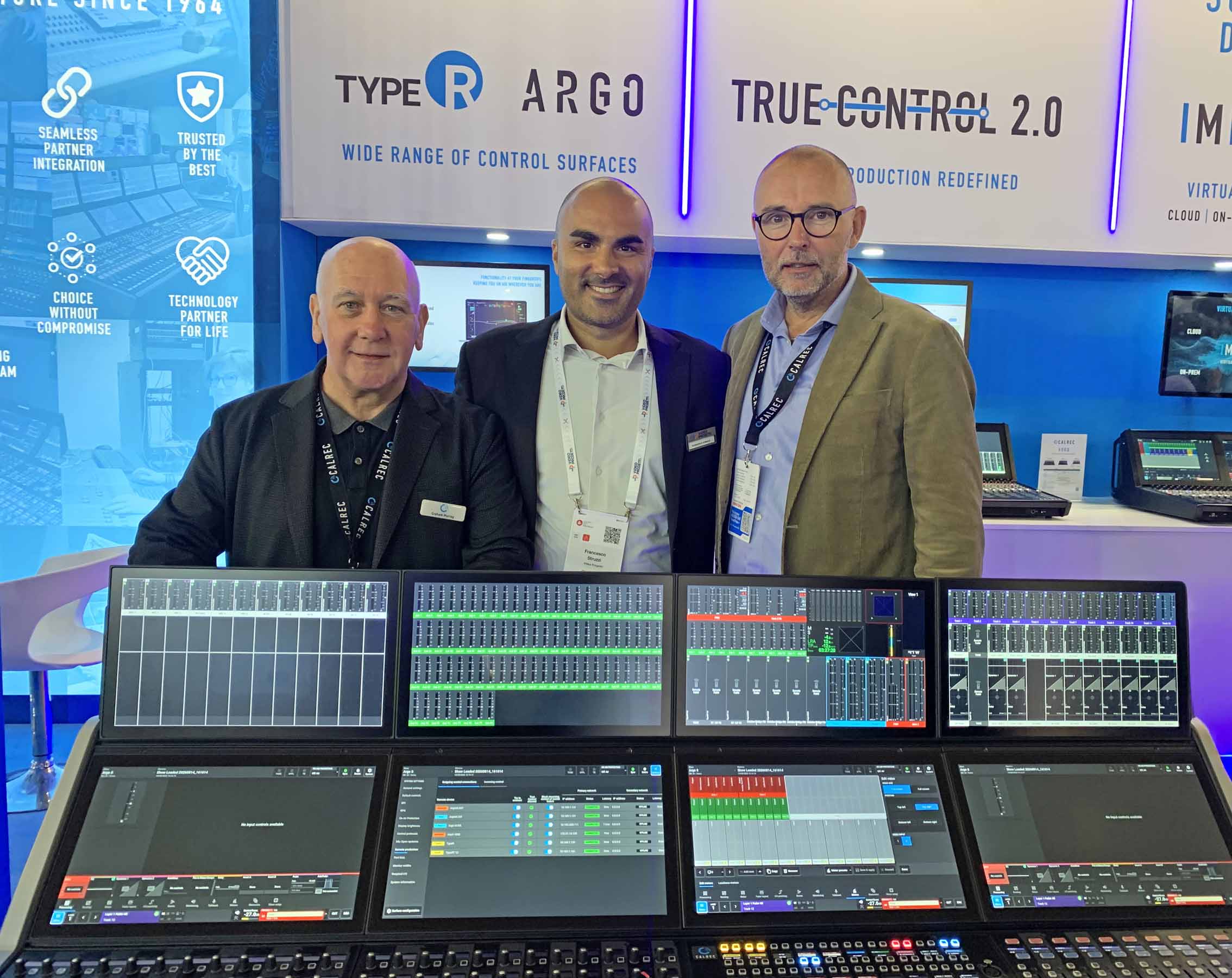
Calrec appoints Video Progetti as Italian distribution partner
Es’hailSat at Milipol Qatar 2026

Sign-Up Here
Industry news, event updates and more. Sign-up for the IAMT Newsletter.