
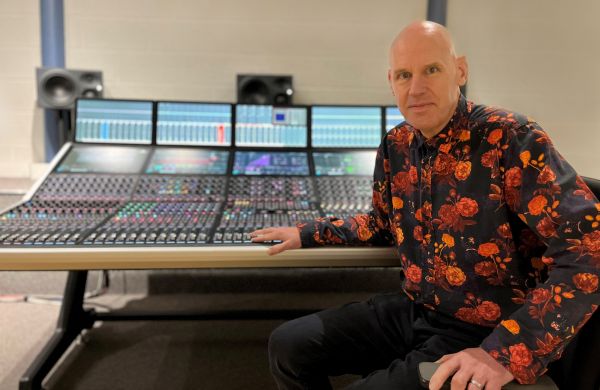
Calrec – Choosing Agility and Flexibility in a Shifting Broadcast Landscape
Henry Goodman, Director of Product Management, Calrec
The broadcast industry has always been incredibly resilient in the face of change, consistently finding ways to adapt technology to find new solutions, solve problems and forge uncharted paths.
But in 2026 something quite unprecedented is happening and relying solely on technology might not be enough. Because this isn’t just a technology shift – it encompasses technology, infrastructure, business models, people, culture, and everything in between.
Over the last few years, the whole framework of the industry has changed at every stage of the production and distribution chain. Digital offerings have allowed broadcasters to expand programming and create new content to engage different demographics. For example, the BBC’s recent Winter Games coverage broke several records; the broadcaster announced there were 83 million streams across the event, with “over 44 million total streamed hours online via BBC iPlayer, the BBC Sport website and the BBC Sport app, with 26.3 million viewers tuning in to the TV coverage.” The broadcaster also reported BBC Sport’s YouTube delivered “record-breaking” growth with a 390 percent increase in total views compared to the Beijing 2022 Games.
The goalposts have moved for the entire broadcast industry, and the impact of that move is affecting everyone.
An Existential Change
Part of what’s driving this change is that traditional broadcasters are having to reinvent how they do things in order to thrive. They understand the market is changing because of the growing number of different platforms that are delivering content, which increases the challenge of meeting the needs of more and more audiences.
It doesn’t necessarily mean they need to do more high-end production. It means they need to find ways to repurpose content faster. It also means they need to find ways to develop new audiences from that content.
The divergence of audiences is creating a demand for more content which is being viewed by fewer people, and the commercial drive behind that means that they have to produce it for less.
Remote Working Maximizes Utilization
Once again, it will be the adoption of new technology that gets us through this shift, but now more than ever it has to be driven from a business perspective. If you don’t have a business driver to push it a certain way, then what’s the point?
Remote and distributed production are already part of that picture. For the majority of the time, most traditional broadcast studios aren’t even powered, while traditional OB trucks are only producing content for the time that the show is in production. The rest of the time it’s stationed in a car park or it’s out on the road.
Remote production allows broadcasters to increase output from one show a day, to two or three. This is agility in action, and because it better utilizes equipment at both ends of the chain it means broadcasters can create more content with the same resources. This agility means their infrastructure, equipment and teams have the time and space to do things that they couldn’t in the past.
The Virtualization Opportunity
The other part of this picture is virtualization, which enables broadcasters to blend their on-premise infrastructure not only with remote operations, but with virtual cloud resources too.
Virtualization means taking software that is normally hosted on dedicated hardware and running it on standardized PCs or servers, and the reason everybody is so excited about it is part of that same agility story. Virtualization allows you to switch things on when you need them, and off when you don’t.
Historically, if a broadcaster wanted to buy a TV studio or a truck it was a significant CapEx commitment. Virtualization means you pay for the resource only when you need it so instead of it being a capital expenditure, a broadcaster can build it into the cost of production. And that is quite an attractive business model for many broadcasters.
Driving Content
As well as being cost-efficient, it also helps fill that content gap. The hole for broadcasters isn’t at the high end; it’s at the lower end. It’s the tier two and tier three level sports, where they need to create more content and address more niche markets. It’s in creating secondary and behind-the-scenes or digital first content. It’s about creating content away from the main event to build engagement.
That’s exactly where their challenge is, and there is such a focus on virtualization because that’s where the biggest cost savings are.
This combination is appealing; if broadcasters can do the production remotely then they only have to send one engineer out to place a few microphones and one camera – which might even be a robotic camera – it suddenly becomes viable. It enables them to create additional content to distribute over more diverse channels like YouTube, strengthen engagement, and support fanbases for niche sports they previously couldn’t cover.
Business Shifts
Never before has the industry had to face such a shift in commercial drivers. We’ve been through technology shifts before, but this affects everybody, and it’s one that both vendors and broadcasters must embrace together.
From a manufacturer’s point of view, the move from CapEx hardware to software licensing is a revenue challenge that will take time to square off. But it’s not just the manufacturers who are dealing with that; unless your business is already subscription based – and most traditional broadcasters are not – you have exactly the same problem.
Broadcasters who will thrive in this environment will be those who design their infrastructures around the ability to adapt to these changing models and prioritize flexibility over proprietary solutions. Equally, manufacturers with strong technology partnerships will have a competitive advantage.
The drivers here are all about choice, agility and utilization. Get those right across your technology decisions, your production models and your commercial thinking, and the rest will follow.
Latest IAMT News

Globecast Demonstrates Content Exchange Latest Capabilities at SPORTEL Monaco 2026

Beam Dynamics Appoints Brian Mauger as Regional Sales Manager, North America

Sign-Up Here
Industry news, event updates and more. Sign-up for the IAMT Newsletter.